

What Is an SEO Article? How to Write for Google and AI Search
What is an SEO article and how does it differ from regular content? Keyword research, search intent, structure, on-page SEO, and measuring traffic and leads.
Many businesses publish articles on their websites consistently, yet those articles get no readers, no rankings, and no customers.
The problem is often not writing skill alone. It may come from choosing topics nobody searches for, writing that misses search intent, or publishing without a structure that connects to other pages on the site.
That is why businesses are paying more attention to SEO articles.
An SEO article is website content created to answer what searchers need, with structure and on-page elements adjusted so search engines can discover, understand, and consider showing it in search results more easily.
The goal is not simply stuffing keywords or writing long copy. You need to create valuable answers that attract the right audience and connect readers to business outcomes.
This article explains what SEO content is, how to find keywords, analyze search intent, outline articles, write content, use AI appropriately, and measure results after publishing.
What is an SEO article?
An SEO article is website content planned from your target audience’s search behavior, with keywords and search intent as the starting data.
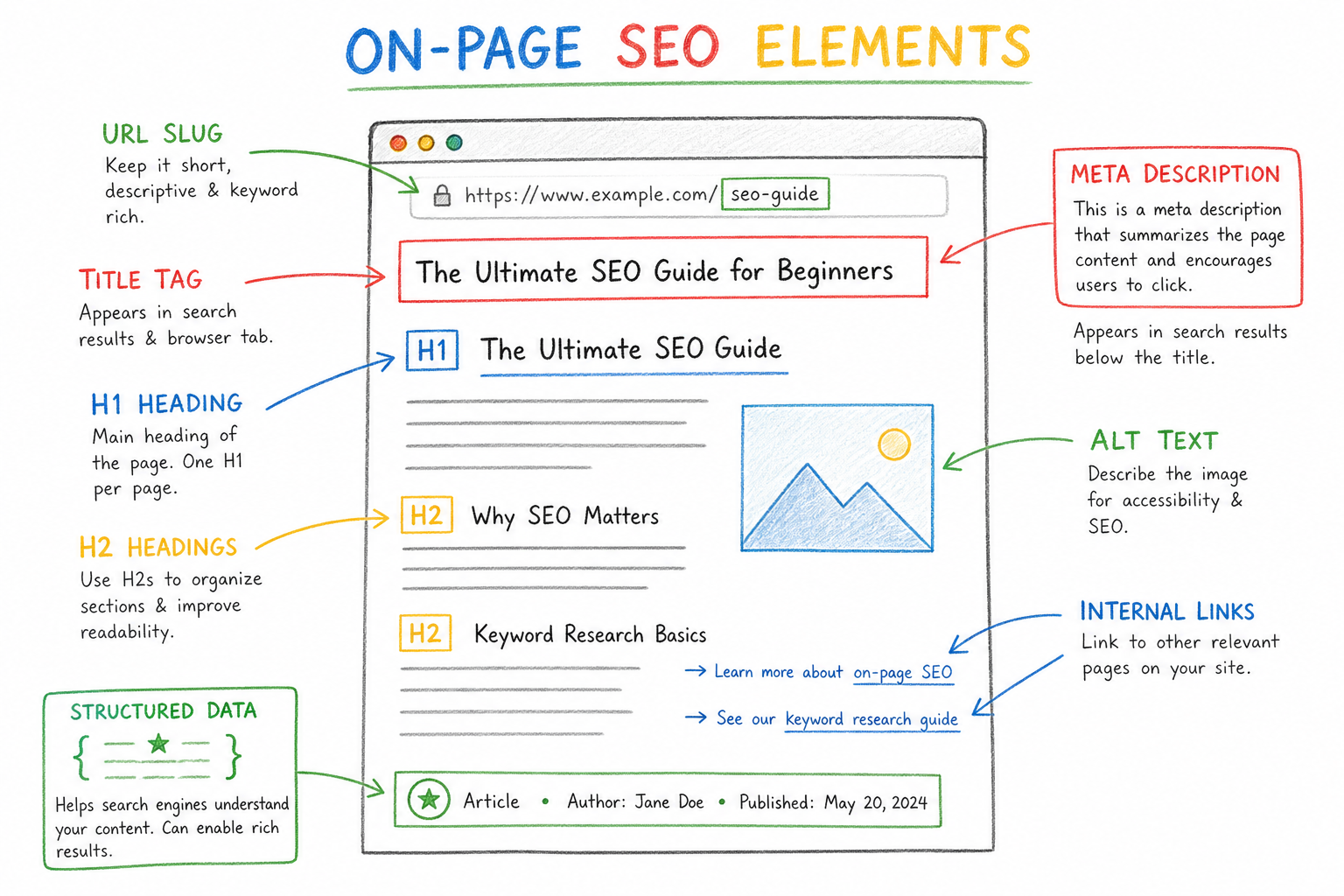
The article is built to answer searchers’ questions and includes elements that help Google understand the content, such as
- Title
- H1, H2, and H3
- URL
- Meta Description
- Internal Link
- External Link
- Alt Text
- Structured Data where appropriate
For example, a solar installation business may find customers searching for
- Is solar panel installation worth it
- Home solar panel cost
- How much can solar panels reduce electricity bills
The business can create articles answering these questions with data on upfront cost, electricity rates, payback period, system size, and conditions that change outcomes.
If the article answers well, readers may click through to a service page, request a quote, or remember the brand for later.
An SEO article is therefore both a tool for organic traffic and part of the customer journey.
What is SEO content?
SEO content has a broader meaning than an SEO article.
SEO content is any type of content created or improved to support visibility on search engines, such as
- Articles
- Service pages
- Product pages
- Category Page
- Landing Page
- Guides
- Glossary
- Case Study
- Calculators
- Video with Transcript
- Images and Infographic
So an SEO article is one form of SEO content — but not all SEO content is an article.
Keywords with purchase-ready intent may fit a service or product page better than a blog post. Forcing every keyword into a blog post can make the page type mismatch what users and Google expect.
How does an SEO article differ from a regular article?
| Topic | SEO Article | Regular Article |
|---|---|---|
| Starting point | Keyword, search intent, and audience data | Ideas, news, or what the writer wants to share |
| Goal | Organic traffic, leads, or conversion | Educate, brand communication, or engagement |
| Structure | Headings and sections from what searchers need | Flexible by writing style |
| On-Page | Title, URL, description, and internal links optimized | May not be adjusted for search |
| Measurement | Impressions, clicks, ranking, and conversion | Pageviews, engagement, or other goals |
| Updates | Revised from search data and competition | Updated as appropriate |
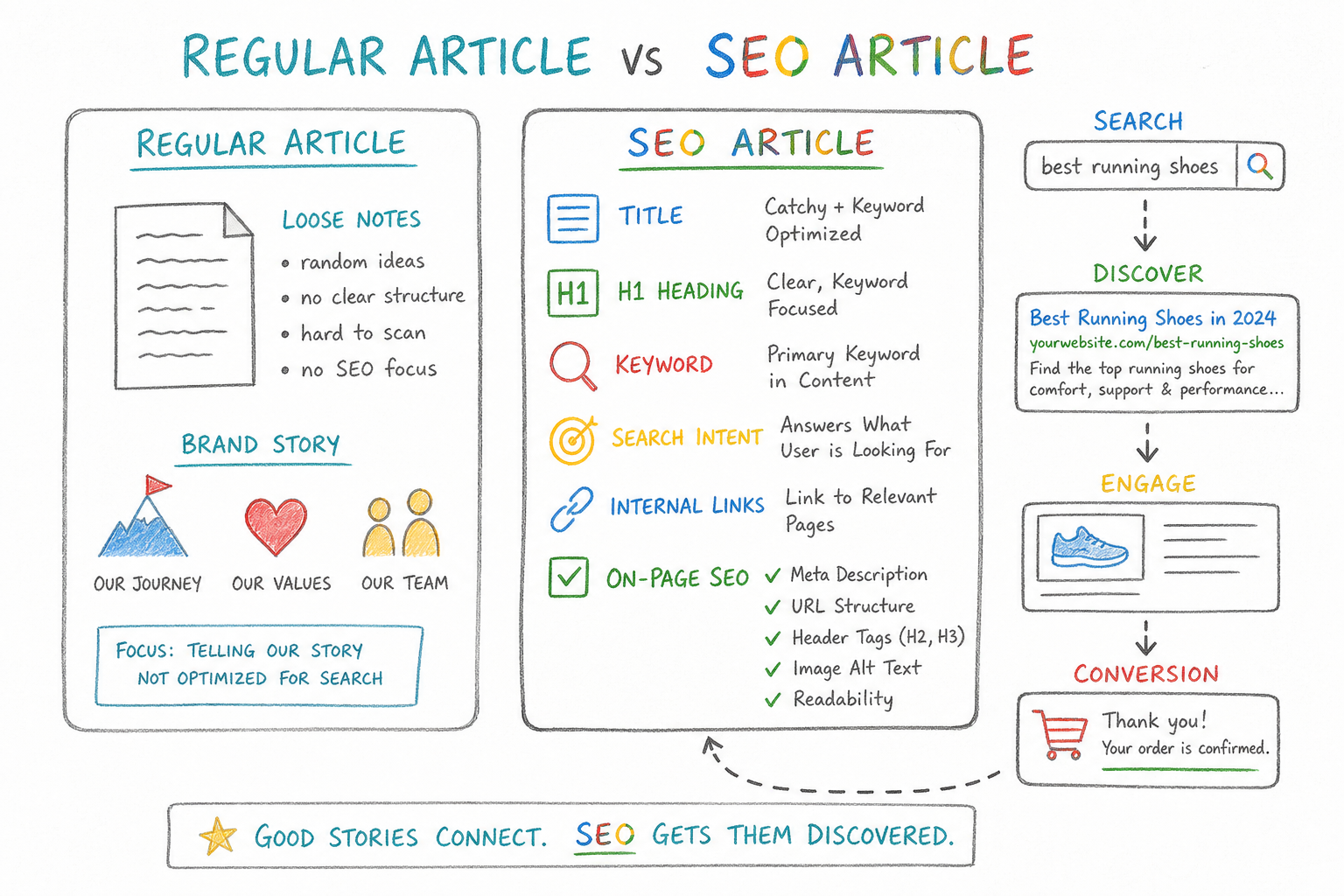
A regular article can rank unintentionally if the content answers something people search for and the site has a solid foundation.
Conversely, an article labeled “SEO” may not rank if it is written too much for bots, lacks useful information, or misses search intent.
How does an SEO article differ from content marketing?
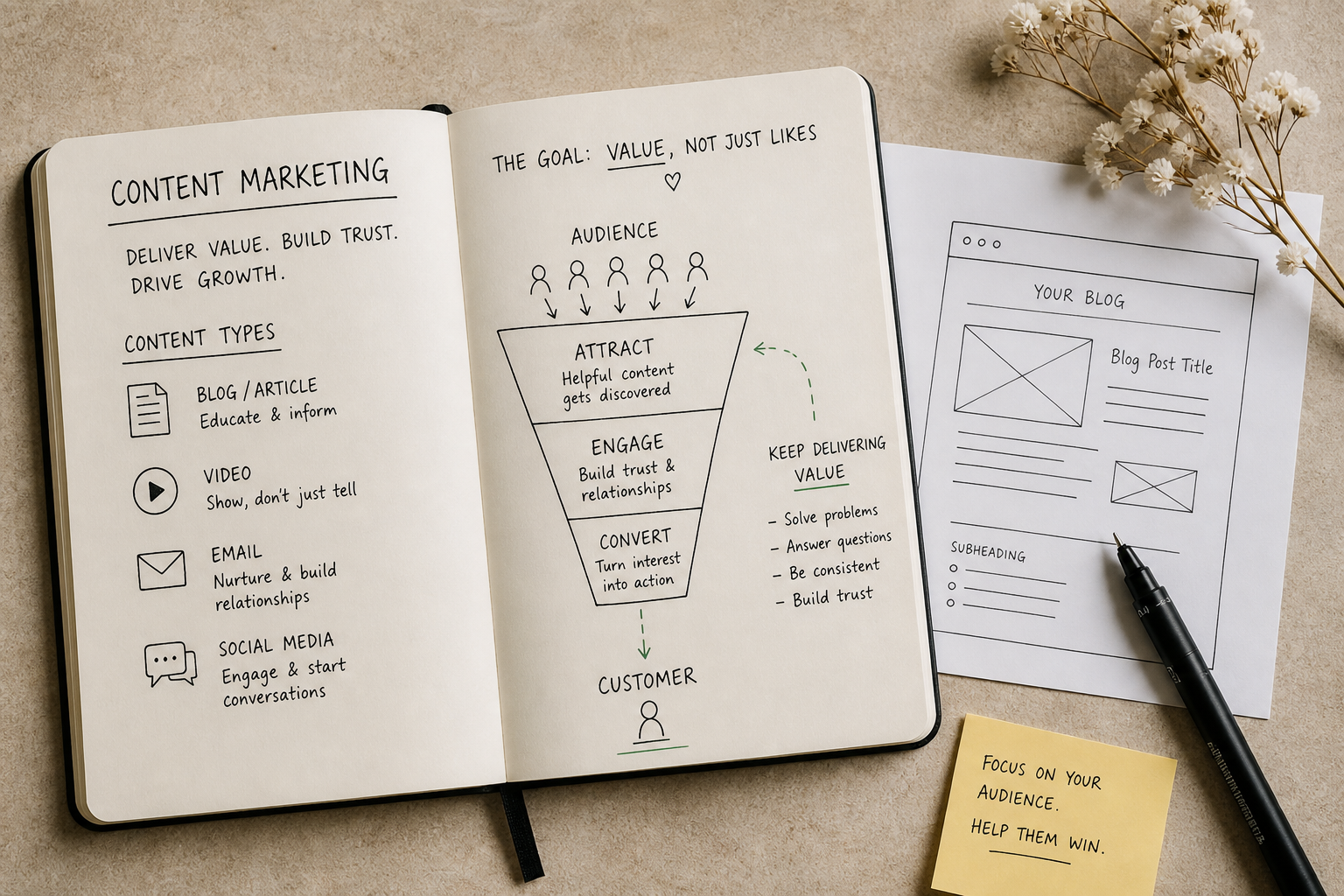
Content marketing is a strategy of using content to attract, build relationships, and turn your target audience into customers.
An SEO article is content that uses search engines as the primary channel to reach readers.
The two work together.
- SEO helps people discover the article
- Content marketing helps turn readers into people who know and trust the brand
- Landing pages help turn interest into conversion
- Email and remarketing follow up with people not ready to buy yet
Building traffic without a plan for what happens after readers arrive can mean clicks without business results.
Benefits of SEO articles
Increase organic traffic
One page can appear for many query variations. You do not need to rank only for the primary keyword.
If the content covers the topic thoroughly and uses natural language, Google may connect the article to related questions and searches.
Reach customers across the customer journey
Articles can answer questions at each stage, such as
Awareness
- What is SEO
- Why does my website get no traffic
- What is organic traffic
Consideration
- DIY SEO or hire an agency
- How SEO differs from Google Ads
- How SEO agencies price services
Decision
- SEO agency for B2B businesses
- SEO services in Bangkok
- Technical SEO service pricing
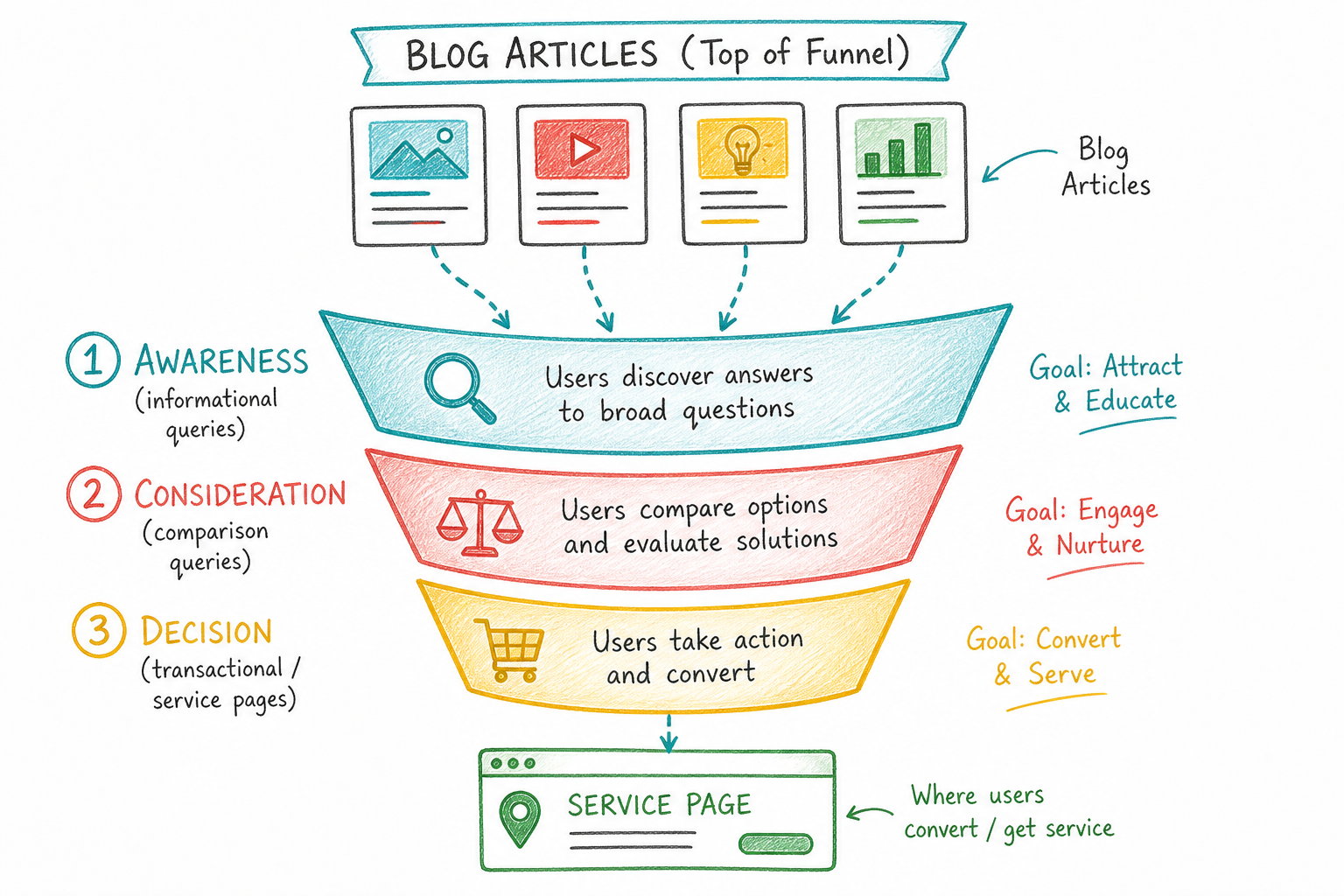
Articles suit informational and comparison intent. Purchase-ready keywords should link to service pages.
Build credibility
Articles that provide accurate information, show experience, and explain limitations honestly help readers assess the business’s expertise.
Credibility does not come from declaring yourself an expert. It comes from the quality of explanations, evidence, and verifiable outcomes.
Support product and service pages
Articles can send internal links to revenue-adjacent pages.
For example, an article on “What is technical SEO” can link to technical SEO services, while this article can link to content SEO services.
Create marketing assets
Ads stop driving traffic when the budget stops. A quality article that ranks can keep bringing visitors.
Rankings are not permanent, though. Content needs review and updates when data or search intent changes.
What to prepare before writing an SEO article
Good writing starts before you open a blank document.
Prepare at least six areas of information.
1. Business goal
Define what the article should produce, such as
- Build brand awareness
- Increase organic traffic
- Send people to service pages
- Grow newsletter signups
- Generate leads
- Reduce repeated customer questions
- Support the sales team
Goals affect topic choice, call to action, and how you measure success.
2. Audience
Identify who will read and what they already know.
An article for new business owners should use different language than one for developers or SEO specialists.
Technical terms are fine when you explain them when needed.
3. Primary keyword
The primary keyword is the main search term that reflects the page topic and intent.
This article uses
what is an SEO article
The H1 can be written more naturally as
What is an SEO article?
You do not need unnatural sentences to preserve exact keyword formatting from every tool.
4. Related keywords
Related keywords are terms and concepts connected to the topic, such as
- SEO content
- How to write an SEO article
- Keyword research
- Search intent
- Semantic keyword
- On-page SEO
- SEO title
- Meta description
- Internal link
These should come from necessary topics — not a list of words to force into the article.
5. Search intent
Search intent is what the user wants to do after searching.
Main intent types include
- Informational: wants knowledge
- Commercial: comparing options
- Transactional: ready to buy or act
- Navigational: wants a specific brand or site
The keyword “what is an SEO article” has informational intent. Searchers want a definition, benefits, components, and how to start writing.
If the article starts selling services immediately without answering, intent will not match expectations.
6. Information gain
Information gain is new value the article adds beyond what already exists.
Examples include
- Data from real customers
- Steps your team actually uses
- Template
- Checklist
- Screenshots
- Before-and-after examples
- Data from Search Console
- Mistakes found in real projects
- Expert perspective
- Limitations competitors do not mention
Summarizing competitor pages in different words is not strong information gain.
How to write an SEO article in 12 steps
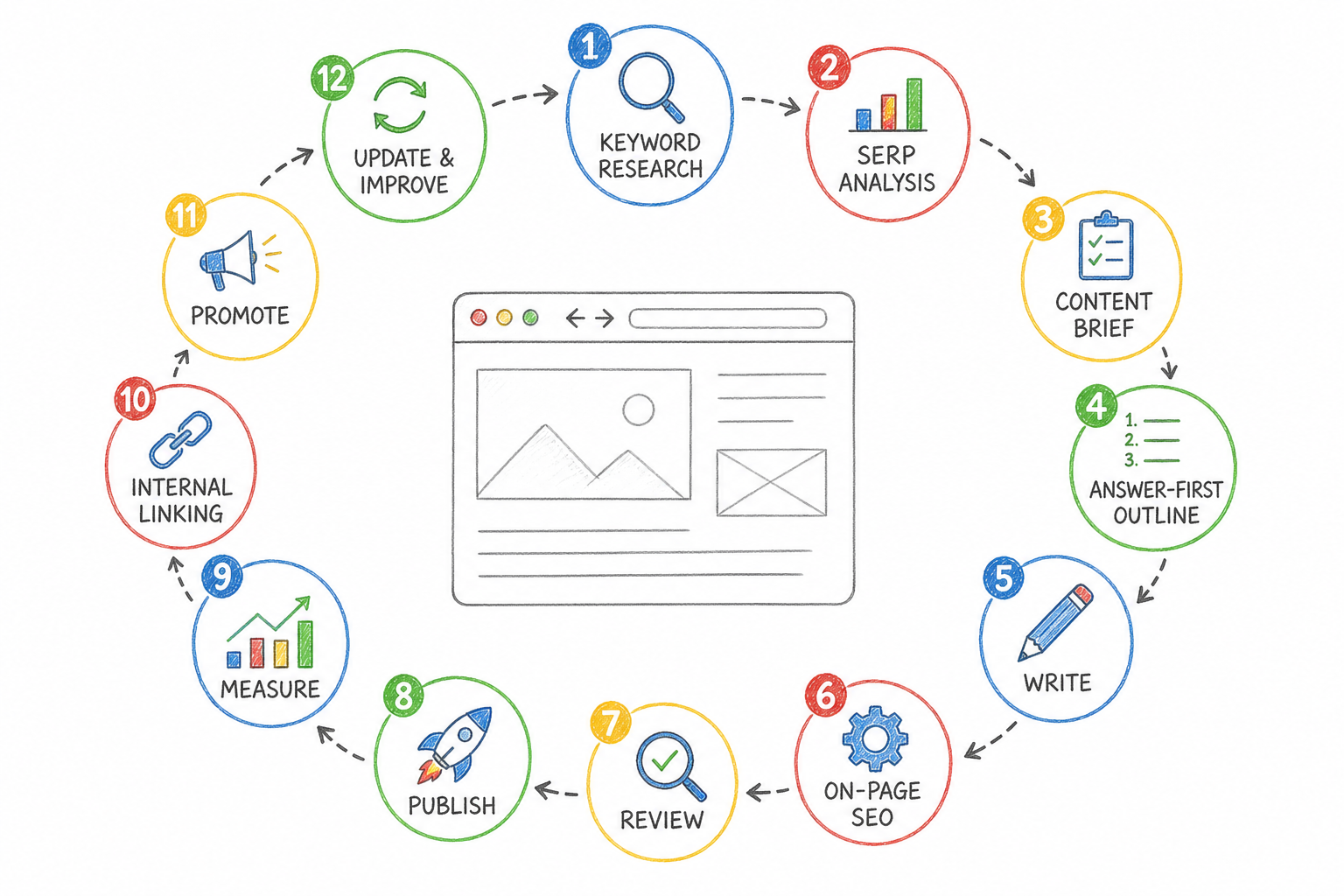
1. Choose a topic relevant to the business
Do not choose keywords from search volume alone.
The topic should meet at least one condition
- Related to products and services
- A customer problem
- Supports revenue pages
- Demonstrates expertise
- Offers specific data only your business can provide
Traffic from irrelevant topics may inflate visitor numbers without creating customers.
2. Do keyword research
Start from words or problems customers actually use, then expand with
- Google Search Console
- Google Autocomplete
- Related Searches
- People Also Ask
- Google Keyword Planner
- SEO tools
- Questions from the sales team
- Customer email and chat
- Product reviews
- Relevant communities
Analyze search volume, intent, competition, and business value together.
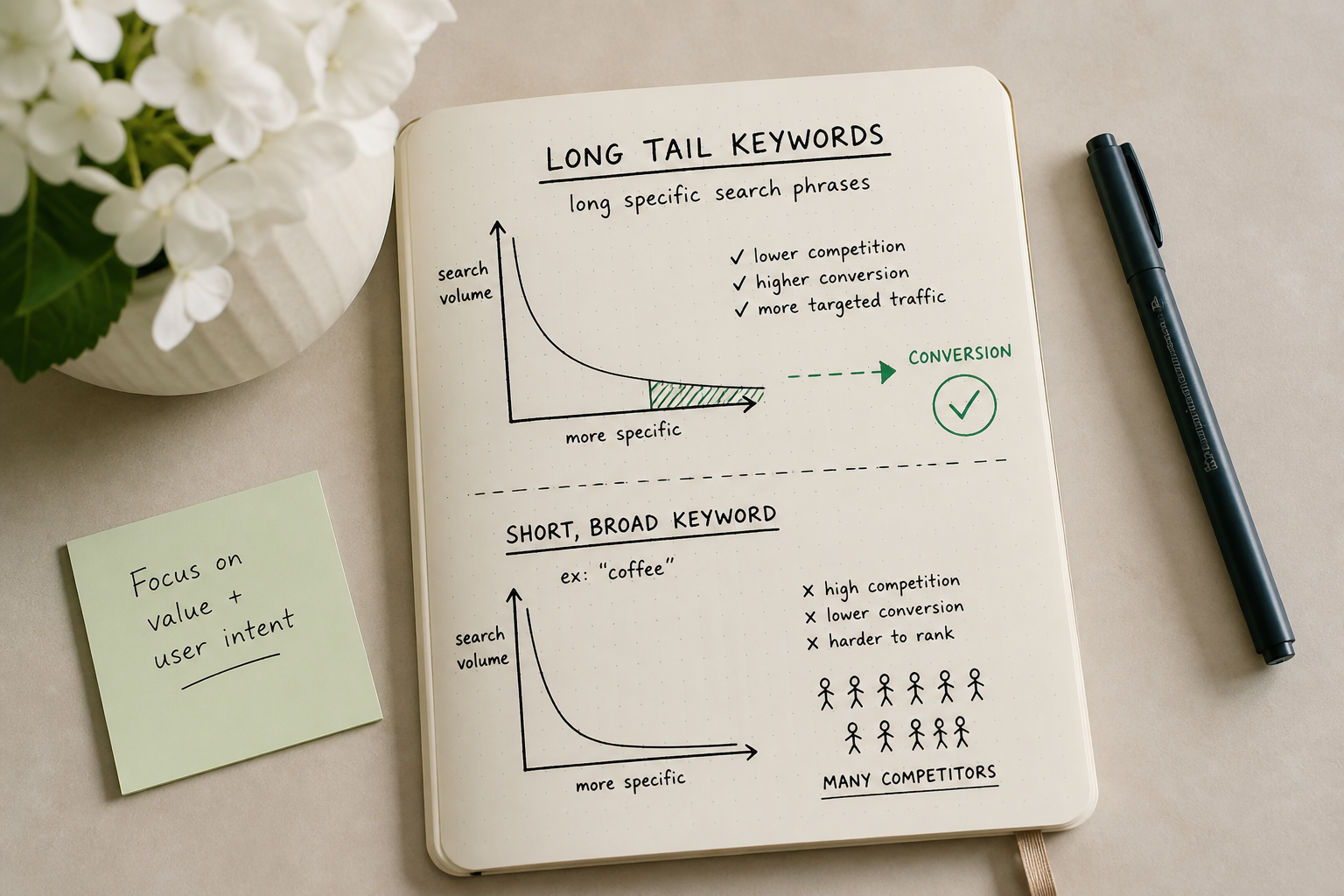
Read more basics at What is a keyword and What is a long-tail keyword.
3. Review the search results page
Search the primary keyword and see what types of content Google shows.
Check
- Article, service page, or product page
- Featured snippet or not
- Video, images, or forum results
- Which headings repeat
- Fresh or dated content
- Beginner or expert audience
- What competitors still miss
Do not copy competitor structure entirely. Use the SERP to understand expectations, then add better information.
4. Define the conversion path
Plan what readers should do after reading.
Examples include
- Read related articles
- Download a checklist
- Subscribe to a newsletter
- View a case study
- Go to a service page
- Request a consultation
- Try a tool
The call to action must match intent. Searchers who are just learning should not be pushed to buy immediately.
5. Create a content brief
A content brief should include
- Primary keyword
- Search intent
- Audience
- Goal
- Draft title
- H2 and H3
- Questions to answer
- Related keywords
- References
- Internal links
- Information gain
- Call to action
- Expert reviewer
A brief aligns writers, SEO editors, and subject owners on the same goal.
6. Outline with an answer-first structure
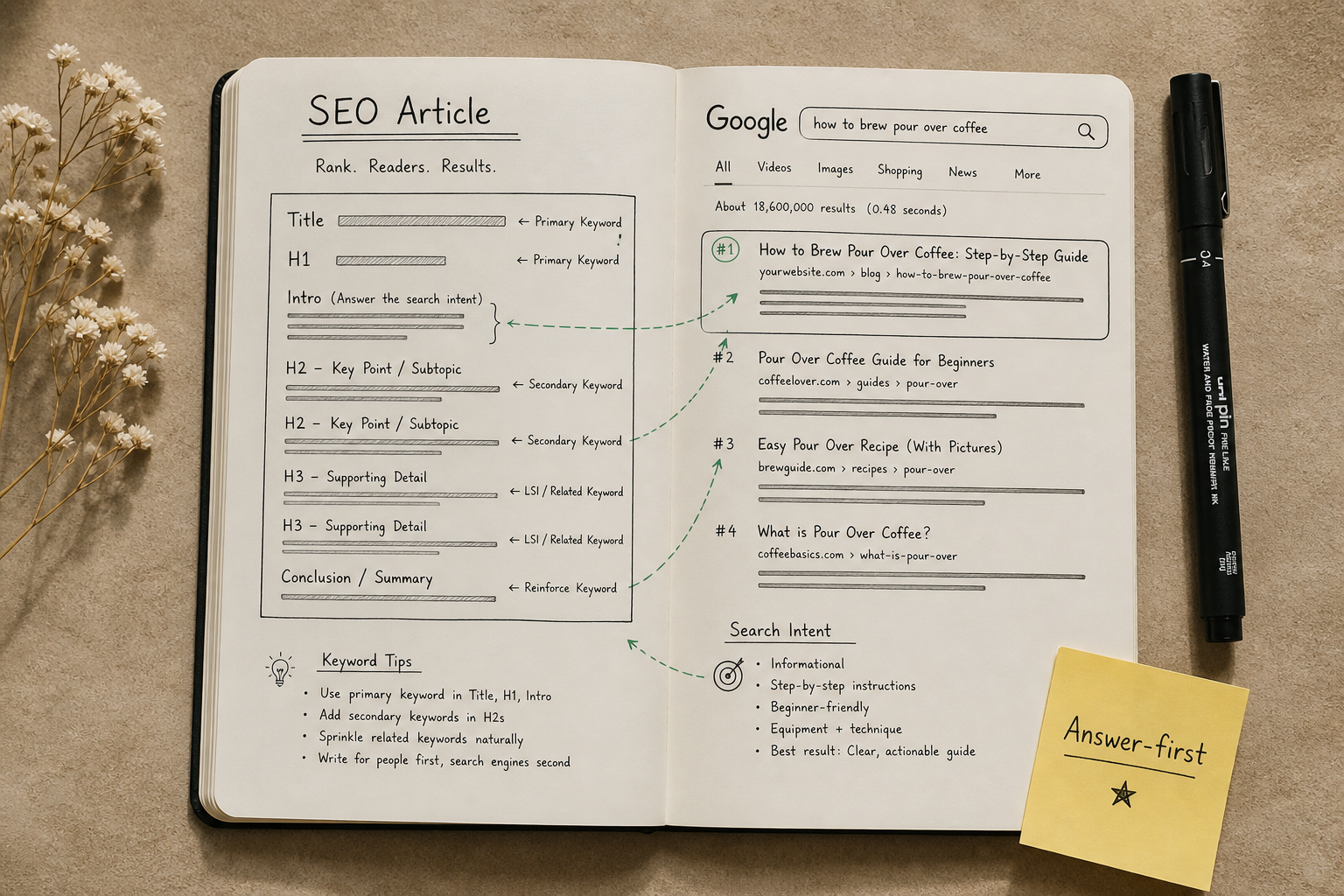
Answer the main question quickly. Readers should not scroll through several intro paragraphs before finding the answer.
A strong structure might be
- Short answer
- Further explanation
- Examples
- Steps
- Limitations
- Checklist
- Frequently asked questions
- Summary and next steps
Each H2 should signal what the reader will get from that section.
7. Write a clear title and H1
Title and H1 do not need to match character for character, but they should align.
A strong title should
- Explain the topic clearly
- Include the primary keyword naturally
- Avoid exaggeration
- Differ from other pages
- Communicate the benefit readers will get
Example
What Is an SEO Article? How to Write for Google and AI Search
Avoid headlines that guarantee outcomes, such as “secret formula to rank number one for sure” — no method guarantees rankings.
8. Write an intro that answers intent
The intro should do three things
- Show you understand the problem
- Give a short answer
- Say what the article covers
You do not need a long history or unrelated statistics at the start.
The primary keyword can appear naturally in the intro, but there is no rule requiring it within a fixed word count.
9. Write from evidence and experience
Separate information into three types
Facts
Use trustworthy references, preferably primary sources when possible.
Experience
Explain context, method, and limitations so readers can tell it apart from generic information.
Opinion
Label advice or perspective. Do not present it as universal fact.
Content should be specific enough for readers to apply.
Instead of writing
Create high-quality content
Explain that
Interview experts, add real project examples, cite primary sources, and answer limitations customers ask about before deciding
10. Optimize on-page SEO
Check key elements
URL
Use a short URL that describes the topic, such as
/en/blog/what-is-seo-article
You do not need the primary keyword in the URL if it makes the link harder to use.
Meta description
Summarize the content and why someone should click concisely.
Meta description is not a direct ranking factor, but it affects how the page may appear in search results when Google uses that text.
Headings
Use H1 as the main topic and H2/H3 for information hierarchy.
You do not need the same keyword in every heading — that makes language stiff and repetitive.
Internal links
Link to pages that help readers learn more or take the next step.
Example internal links for this article
External links
Link to primary sources when they support facts or add necessary detail.
Alt text
Alt text describes images for users who cannot see them and helps search engines understand context.
Do not stuff keywords into alt text if the image does not show that subject.
11. Quality-check before publishing
Run at least four review passes
Editorial review
- Easy to read
- No repetition
- Paragraphs not too long
- Headings match content
Fact check
- Verify names, numbers, dates, and claims
- Open references
- Separate current from outdated information
SEO review
- Intent is correct
- Title and H1 are clear
- Internal links are complete
- No keyword cannibalization
Business review
- Information matches real services
- No unrealistic guarantees
- CTA and tracking work
12. Publish, measure, and update
After publishing, verify
- Page is indexed
- Canonical is correct
- Sitemap includes the URL
- Internal links point to it
- Images load properly
- Structured data has no errors
- Conversion tracking works
Then track results and update from real data.
Where should you place keywords?
Suitable positions for the primary keyword include
- Title
- H1
- URL when natural
- Introduction
- Some headings
- Body content
- Meta description
- Alt text only when it truly describes the image
You do not need every position filled mechanically or exact match every time.
Google understands synonyms, phrasing variations, and related meaning.
Terms that can support or replace “SEO article” include
- SEO content
- Search-focused content
- Writing articles to rank on Google
- Content SEO
- SEO content writing
What should keyword density be?
No keyword density guarantees rankings.
Formulas like 1%, 2%, or 2.5% may serve as early warning signals but should not be writing goals.
If you try to place “SEO article” in every paragraph, the copy reads unnaturally and risks keyword stuffing.
Better approach
- Use the primary keyword in key positions
- Write to cover real questions
- Use related words and entities
- Read aloud to check natural flow
- Remove keywords that add no meaning
The Google SEO Starter Guide states that keyword stuffing violates policy, and there is no minimum or maximum word count that automatically improves rankings.
How long should an SEO article be?
The answer is as long as needed to satisfy search intent.
An article on “mall opening hours” may answer in a few paragraphs, while a guide to choosing ERP for factories may need thousands of words.
Consider
- Topic complexity
- Reader knowledge level
- Number of questions to answer
- Page types Google shows
- Evidence and examples needed
- Ability to maintain quality
Do not add unrelated sections just to outlength competitors.
A long article is not automatically complete, and a short one is not automatically thin if it answers directly and sufficiently.
How to make articles AI-friendly
Content that AI search can use easily should be clear, verifiable, and uniquely valuable.
Answer questions directly
Start each section with the answer before details.
Example
An SEO article is content created to answer search intent and structured so search engines can understand it easily.
This sentence can be cited without reading several paragraphs first.
Name entities clearly
Write the full term before abbreviations, such as
Search Engine Optimization (SEO)
Avoid pronouns that make it unclear who or what you mean.
Add evidence
Use data from
- Official documents
- Research
- Company data
- Named experts
- Case studies that explain how results were measured
Add information gain
AI can summarize general knowledge well. Content that only rearranges what already exists is harder to compete with.
Add what is hard to find elsewhere, such as
- Search Console data
- Templates your team uses
- Mistakes from real projects
- Screenshots
- Test results
- Expert commentary
- Decision frameworks
Use readable structure
Use headings, lists, tables, and appropriate paragraph length. You do not need to chop every answer into unnaturally short sentences.
Google states there is no requirement to “chunk” content into small pieces specifically for AI.
Show accountability for information
Include
- Author
- Content reviewer
- Publish date
- Update date
- References
- How data was collected
- Limitations
This helps both people and systems assess context.
Can you use AI to write SEO articles?
Yes, but you should not prompt AI and publish immediately.
Google does not ban content simply because it was created with AI. The problem is low-quality content or mass production meant to manipulate rankings.
AI works well for tasks such as
- Brainstorming ideas
- Grouping questions
- Creating outlines
- Summarizing documents
- Suggesting title formats
- Checking repetition
- Adjusting reading level
Humans still own
- Fact-checking
- Choosing references
- Adding real experience
- Matching brand voice
- Checking personal data
- Removing exaggerated claims
- Approving content before publish
Read the latest guidance in Google: Optimizing for generative AI features.
How do you measure SEO article performance?
Do not measure only primary keyword rankings.
Visibility
Check in Google Search Console
- Impressions
- Clicks
- CTR
- Average position
- Queries
- Countries
- Devices
Behavior
Check in GA4 or your analytics system
- Organic sessions
- Engaged sessions
- Scroll
- Internal link clicks
- Downloads
- Video engagement
Business outcomes
- Form submissions
- Calls
- LINE clicks
- Newsletter signups
- Qualified leads
- Conversion rate
- Revenue
- Assisted conversions
An article with modest traffic but strong qualified leads may be worth more than one with high readership but no business relevance.
How long does it take for an SEO article to show results?
There is no fixed timeline.
Results depend on
- Site strength
- Competition level
- Content quality
- Internal links
- Crawl and indexing
- Site trust
- Search intent fit
- Promotion and backlinks
New sites or highly competitive topics may take months, while established sites with authority and strong internal links may see impressions sooner.
Evaluate trends over weeks or months — not daily ranking swings.
Common mistakes
Choosing keywords from search volume alone
High-volume keywords may be highly competitive or fail to create customers.
Evaluate business value and intent together.
Copying every competitor heading
This removes information gain and turns the article into a structural duplicate.
Putting keywords in every paragraph
Copy becomes stiff, hard to read, and adds no value.
Using AI without fact-checking
You may get numbers, references, or case studies that do not exist.
Long intro that does not answer
Readers must scroll for what they need, and AI has a harder time extracting the answer.
No internal links
The article becomes a dead end that does not help readers explore or enter a conversion path.
Never updating after publish
Prices, tools, and search intent can change.
Measuring rankings only
Higher rankings without leads may not be the outcome the business needs.
SEO article checklist before publishing
Strategy
- Keyword relevant to the business
- Search intent is clear
- Correct page type chosen
- Goal and CTA defined
- No overlap with existing pages
Content
- Main question answered in the intro
- H2/H3 structure is easy to follow
- Information gain present
- Facts have references
- No filler to increase word count
- Expert review when needed
On-page
- Clear title and H1
- Concise URL
- Unique meta description
- Internal links complete
- External links to trustworthy sources
- Images have descriptive alt text
- Structured data matches actual content
Technical
- Page loads with status 200
- No accidental
noindex - Canonical is correct
- Mobile works
- Images are not oversized
- No broken links
- Conversion tracking works
Summary
An SEO article is content built from what searchers need, with structure and on-page elements that help search engines understand it.
Articles with a real chance of results do more than place keywords. They
- Choose topics relevant to the business
- Do keyword research
- Analyze search intent
- Review search result page types
- Create a content brief
- Answer with an answer-first structure
- Add specific data or experience
- Optimize on-page and internal links
- Fact-check
- Measure leads and conversion after publishing
No keyword density, word count, or single technique guarantees rankings.
What matters more is creating answers that are accurate, useful, distinct, and connected to what the business can actually help readers achieve.
If you want to plan keywords, topic clusters, and articles that connect to service pages, see content SEO services.
Frequently asked questions
What is an SEO article?
An SEO article is website content created to answer search intent, with on-page structure and elements that help search engines understand and display it in search results more easily.
How long should an SEO article be?
There is no fixed word count. It should be as long as needed to answer the question fully without padding. Evaluate based on search intent, topic complexity, and competitor page quality.
How many times should you use a keyword?
No count or keyword density guarantees rankings. Place the primary keyword naturally in key positions and use related terms to cover the topic thoroughly.
Can you use AI to write SEO articles?
Yes, but you must fact-check, remove fabricated details, align with your business, and add original experience or data before publishing. Quality and reader value matter more than how it was produced.
How long does it take for an SEO article to show results?
There is no fixed timeline. Some articles may start earning impressions within a few weeks, while highly competitive markets or new websites may take several months.
How does an SEO article differ from a regular article?
An SEO article starts from search data and search intent, targets organic search, and optimizes title, headings, internal links, and on-page elements. A regular article may be written for other goals without a search focus.