

What Are Backlinks? Why They Matter for SEO and Your Website
Backlinks explained simply: how they work, impact on SEO, which links help or hurt, and how to build quality links sustainably in 2026.
If you have studied what SEO is, you have probably heard backlinks often.
Some say backlinks are a key factor for ranking on Google.
Others argue backlinks matter less than before because Google prioritizes content quality and user experience more.
What is actually true?
Backlinks still matter for SEO — but Google no longer looks only at link count. Quality, relevance, and trust of linking sites matter more than ever.
This article explains what backlinks are, how they work, how they affect SEO, and which types to build for sustainable growth.
What are backlinks?
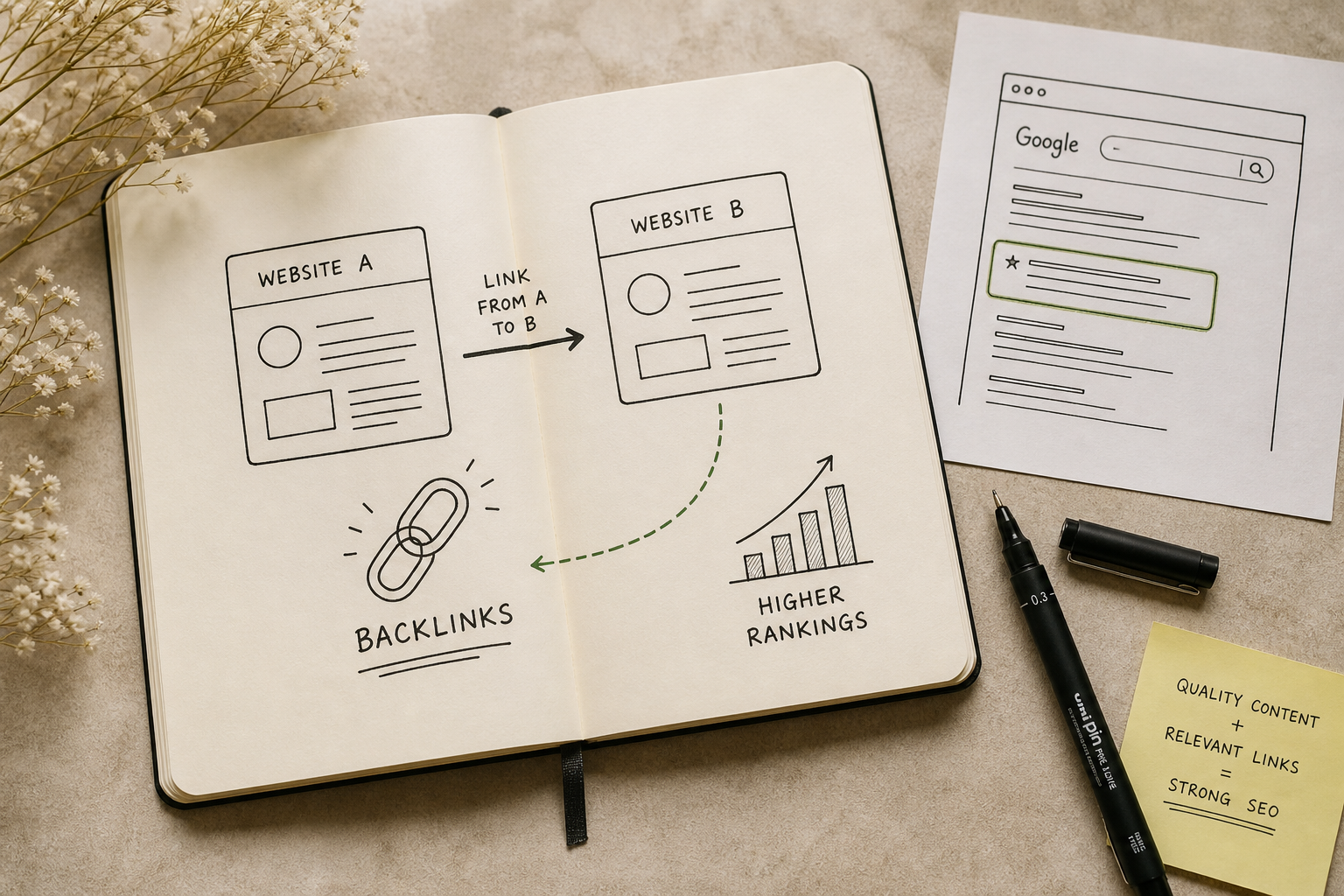
Backlinks are links from other websites that point to your site.
For example, if website A publishes an article with a link to your site, that link is a backlink for you.
Google treats backlinks as signals that help assess site trust — when other sites reference your content, it suggests that content may be valuable and worth considering in search results.
Why do backlinks matter for SEO?
Backlinks help Google understand relationships between websites and are one of many factors used to evaluate page quality.
Backlinks from trusted, relevant sites can strengthen your site’s credibility and support rankings — see our backlink building service focused on quality and relevance.
However, backlinks are only one part of SEO. Content quality, site structure, and user experience remain equally important.
How do backlinks work?
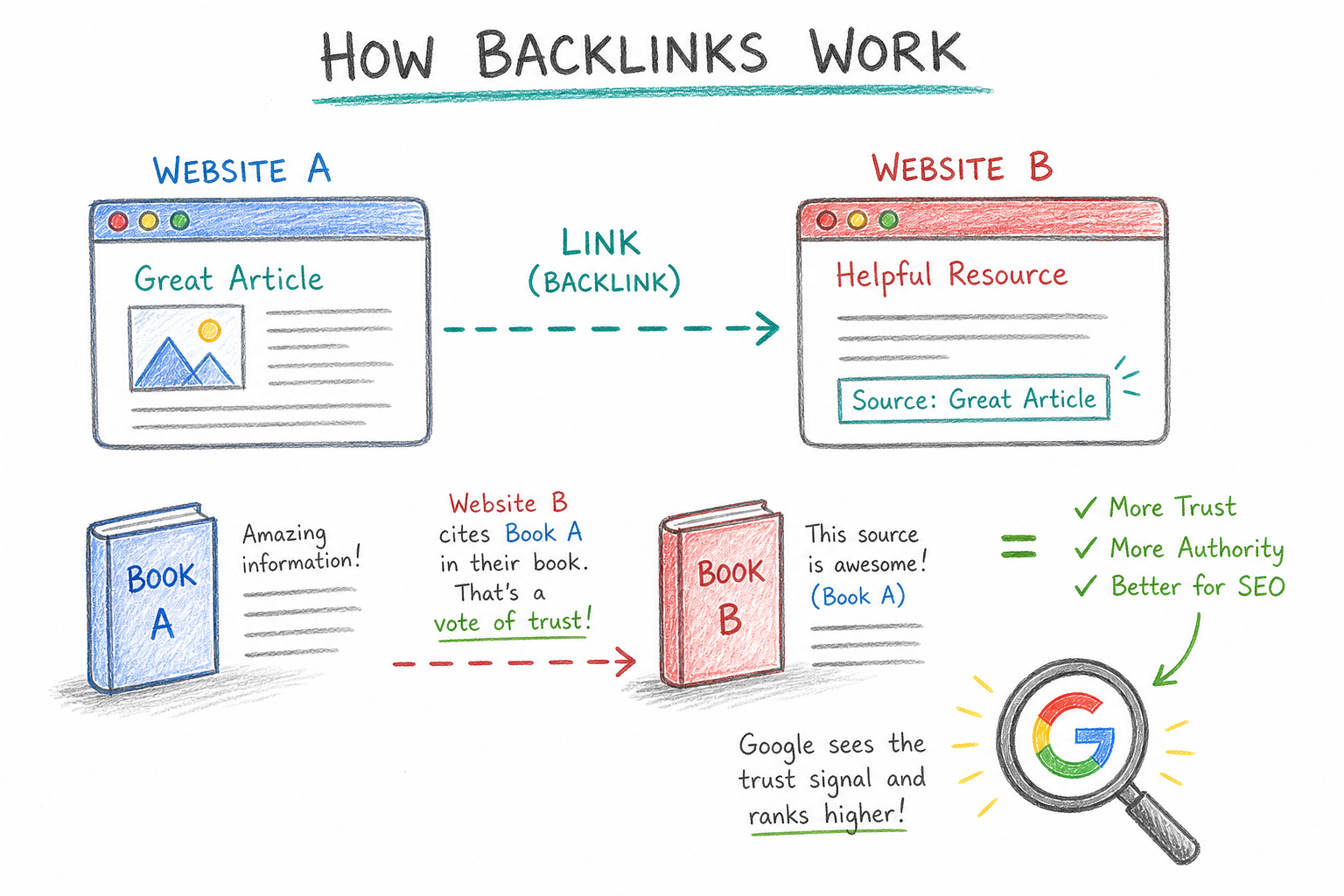
Imagine each website is a book.
When a book is cited by respected publications, readers trust it more.
Backlinks work the same way.
Sites referenced by quality websites often earn more trust from Google.
What types of backlinks exist?
Dofollow backlinks
These links can pass SEO value to the destination site.
They are usually the main target of link building.
Nofollow backlinks
These tell search engines not to pass ranking signals through the link.
They may not affect SEO like dofollow links, but they still support brand awareness, traffic, and link profile diversity.
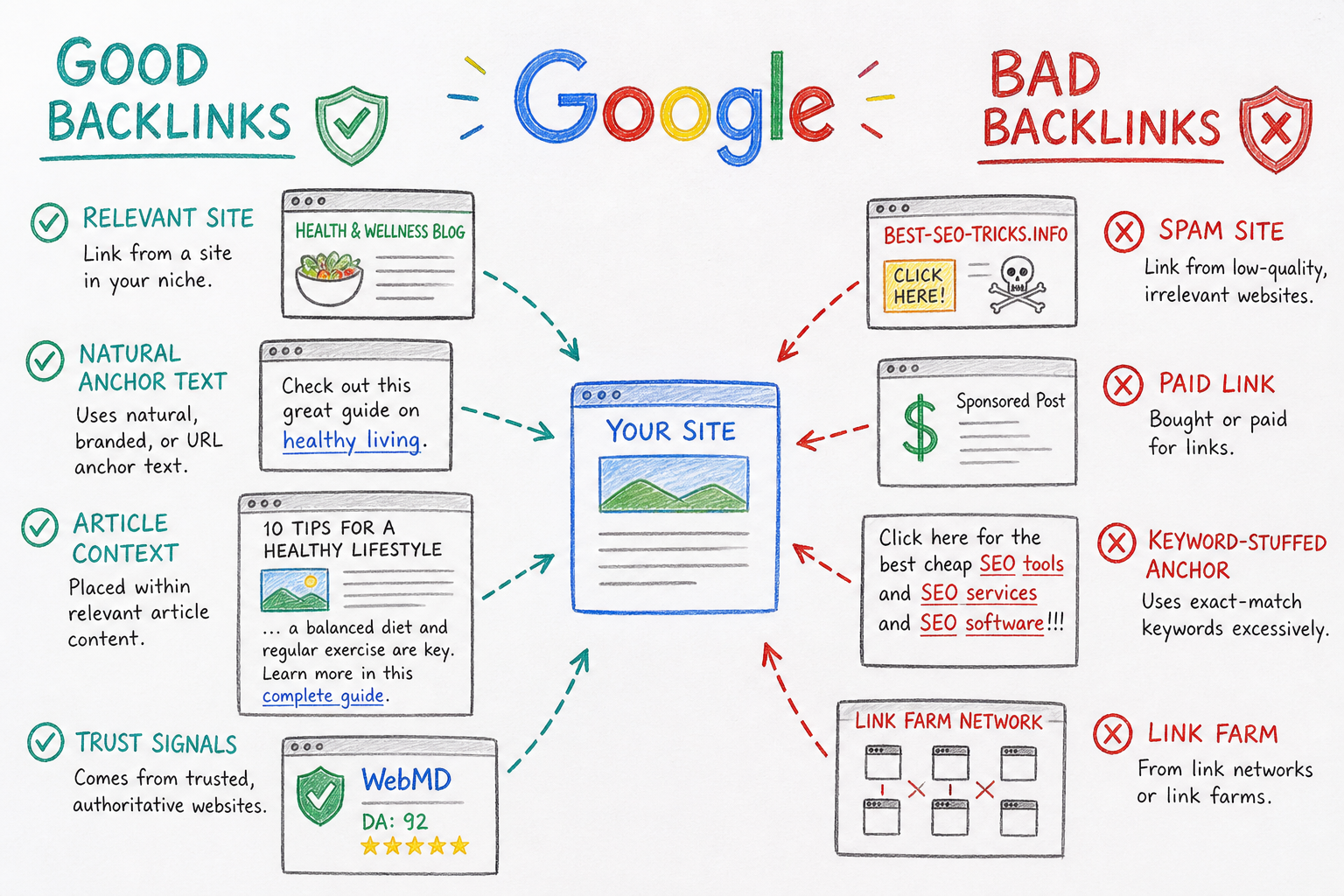
What makes a good backlink?
Quality backlinks usually have these traits
- from sites related to your business
- placed inside article content
- from trustworthy websites
- natural anchor text
- potential to send real visitors
Google values quality over quantity — a modest number of relevant backlinks often beats many low-quality links.
Which backlinks should you avoid?
Risky backlink patterns include
- links from spam sites
- buying many links from the same network
- unrelated link exchanges
- over-optimized, repetitive anchor text
- sites built mainly to sell links
These may not improve rankings and can harm your site — read more in what grey hat SEO is.
Are backlinks still important in 2026?
Yes.
But importance shifted from link volume to link quality.
Google’s algorithms better understand content context, site trust, and link relevance.
Sites with strong content and references from relevant sources often outperform mass low-quality link building.
Backlinks vs content quality — which matters more?
Both work together.
Great backlinks with weak content may still lose visitors quickly.
Excellent content with zero references may take longer to build trust in Google’s eyes.
The right approach is valuable content through content marketing and content SEO strategy, then natural outreach and link building.
How to build quality backlinks
Common approaches include
- guest posts
- original research or data
- digital PR
- free tools or templates
- in-depth articles that answer hard questions
- asking partners to cite your work when appropriate
The goal is links earned from content value — not inflating backlink counts alone.
Should you buy backlinks?
Buying backlinks requires careful judgment.
Many providers sell links from low-quality or link-only sites that may not deliver expected results.
If you invest in link building, prioritize relevant sites with real audiences that deliver both SEO and traffic value.
How to check your backlinks
Popular tools include
- Google Search Console
- Ahrefs
- SE Ranking
- Semrush
These help you review backlink counts, referring domains, anchor text, and link quality to refine your SEO plan.
Common backlink misconceptions
More backlinks always mean higher rankings
False.
Google weighs link quality and relevance more than volume.
Buying backlinks guarantees fast rankings
No guarantee — rankings depend on site quality, content, and keyword competition.
SEO means building backlinks first
For many sites, fixing structure and publishing quality content should come first — that foundation makes link building more effective.
Summary
Backlinks are links from other websites to yours — and remain one factor Google uses to assess trust.
Modern SEO is not measured by backlink count alone. Content quality, user experience, and relevance of linking sites all shape rankings.
For long-term results, build valuable content alongside natural link building — because the best backlinks are usually the ones other sites choose to give when they see real value in your work.
Frequently asked questions
Are backlinks the same as internal links?
No. Backlinks come from other websites to yours. Internal links connect pages within the same site.
How many backlinks do you need to rank?
There is no fixed number. It depends on keyword competition, site quality, and link quality.
Do free backlinks help?
Yes, when they come from relevant, quality sites — not link farms built only to give away links.
When should a small business start building backlinks?
After the site is ready with quality content and sound SEO structure. Then link building amplifies results.