

AI visibility audit
Build a picture of how AI currently sees your brand — brand mentions, citations, sentiment, and competitors in the same answers.
Services / GEO services
GEO services for businesses that do not want to stop measuring at Google rankings alone — in the AI search era, visibility must cover citations, brand mentions, and leads, not just positions.
Teams that trust us





GEO services plan and improve your website, content, and brand information to increase the chance generative AI systems discover, understand, and cite or use your information when answering user questions.
GEO stands for Generative Engine Optimization — covering Google AI Overviews, AI Mode, ChatGPT Search, Perplexity, Gemini, Microsoft Copilot, and other AI search systems. The goal is not just to appear in answers, but to make the information AI presents accurate, aligned with your positioning, and connected to business outcomes.
GEO is not a one-time keyword or schema exercise. It combines SEO, content strategy, technical accessibility, brand entity work, digital authority, and measurement — read the fundamentals in what is GEO.
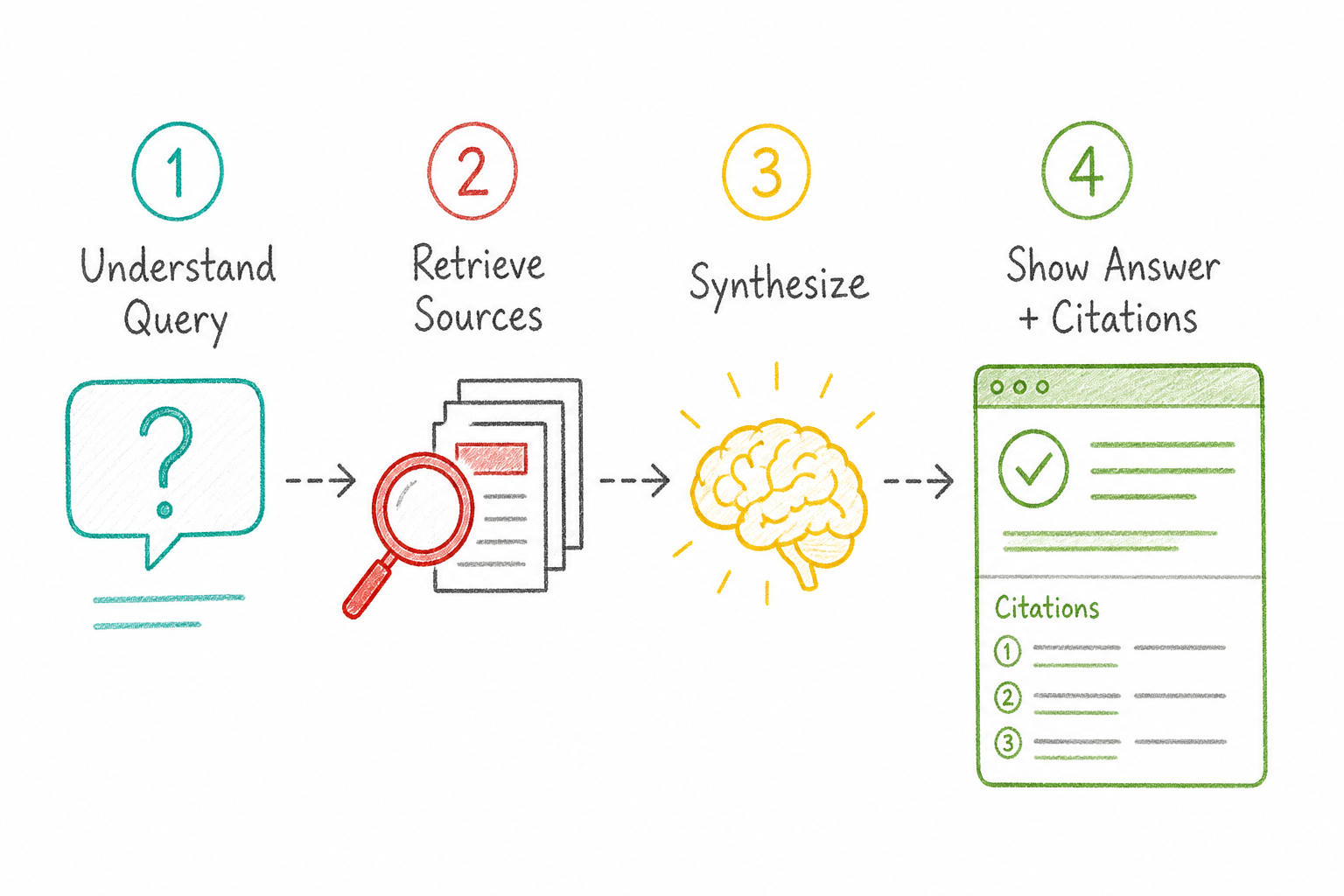
GEO services fit businesses facing these situations — if any sound familiar, the first step is not to publish more articles immediately, but to find where visibility is missing and why
Providers selling schema, llms.txt, or article volume without a baseline, prompt set, or measurement plan can leave you investing without knowing what you get back — an AI visibility review before work starts matters.
If any of these sound familiar, Serplit can establish a baseline and find where your brand disappears from AI answers.
If any of these sound familiar, an AI visibility review will show what your brand is missing and where to start.
Every layer AI search systems use to discover, understand, and cite your brand — from audit through to lead measurement.
Build a picture of how AI currently sees your brand — brand mentions, citations, sentiment, and competitors in the same answers.
Analyse questions across the customer journey — from problem-aware through to purchase decision.
Define what people and AI should understand your brand is an expert in.
Improve or create content that answers users first, then strengthens search readiness.
AI systems cannot use information they cannot reach — covering crawl, index, robots.txt, canonicals, and AI search crawler policies. Read more about [technical SEO](/en/services/technical-seo).
Use schema when it matches the page type — organization, person, article, service, product, local business, and more.
AI search may consider information from many sources, not only your website.
GEO must be measured, not guessed — tracking mentions, citations, AI share of voice, referral traffic, and leads.
Every step is auditable — from baseline through to connecting AI visibility with traffic and leads.
Step 1
Study business goals, customers, competitors, sales cycle, and target AI platforms — whether brand awareness, citations, leads, or fixing incorrect brand information.
Step 2
Build keyword and prompt sets and record current visibility before work starts so each round can be compared fairly.
Step 3
Review technical SEO, content, entity data, structured data, authority, analytics, and external sources, then prioritise by impact.
Step 4
Fix technical issues, improve service pages, build content clusters, add case studies, strengthen entity data, and set up conversion tracking.
Step 5
Use the same prompt set and conditions to track changes in citations, mentions, competitors, and brand accuracy.
Step 6
Analyse which pages AI visibility sends traffic and leads to, then improve landing pages and CTAs for conversion.
GEO does not replace SEO — Google states in its generative AI search optimisation guidance that SEO still matters because AI Overviews and AI Mode build on the same search index and quality systems.
If Google cannot crawl or index your site, or your content lacks quality, your chances in Google's AI systems drop — Serplit treats SEO and GEO as one strategy, not content for AI that ignores real users.
Month 1 — baseline and foundation: business and competitor discovery, AI visibility baseline, prompt set, SEO and technical audit, content and entity audit, measurement plan, and prioritised roadmap.
Month 2 — implementation: fix technical priorities, improve service and core pages, build content clusters, strengthen entity signals, adjust structured data, set conversion tracking, and start authority planning.
Month 3 — expansion and measurement: publish or improve key content, re-check AI visibility, analyse citation gaps, compare competitors, improve landing pages, and summarise results — the first three months build foundation, not guaranteed citation counts.
Google AI Overviews and AI Mode — focus on foundational SEO, indexability, helpful content, and information gain. Google does not require AI schema or llms.txt for generative AI search eligibility.
ChatGPT Search — review search crawler accessibility and build citable brand information. Perplexity — track citations and improve verifiable content. Microsoft Copilot — review Bing index, sitemaps, and related search factors.
Each platform uses different sources and citation systems, so strategy and measurement should stay separate — do not generalise results from one platform to all.
GEO fits B2B businesses with long research cycles, service businesses, SaaS, healthcare, professional services, real estate, education, e-commerce with comparison content, brands building category authority, and teams that want leads over vanity metrics.
GEO may not be the first priority if your site is not indexed, your offer is unclear, analytics and conversion tracking are missing, you need sales within days, or you want guaranteed citation counts — fix the foundation first.
We start from business goals, not keyword or schema counts — SEO and GEO run together, measurement starts from an explainable baseline, and we do not sell guarantees nobody can control.
Citations and mentions matter, but you still need to know whether AI channels create traffic, leads, and revenue — Serplit covers site structure, content, entity data, structured data, and conversion tracking end to end.
Before you hire, ask how AI visibility baselines are captured, which prompt sets are used, whether results are split by platform, and how GEO connects to SEO. Ask what technical, content, and authority work is included.
Follow up on how citations, mentions, referral traffic, and leads are measured, whether data limitations are reported, whether uncontrollable outcomes are guaranteed, who owns content after the contract, and whether sample deliverables are available.
Good providers explain methodology openly — they do not hide behind secret formulas or claim schema and plugins can force AI to recommend your site.
Actual scope depends on your site and plan, but deliverables may include an AI visibility baseline, competitor citation analysis, prompt and query map, SEO/GEO technical audit, content gap analysis, entity map, topic cluster plan, on-page recommendations, structured data recommendations, content briefs, content optimisation, internal linking plan, authority roadmap, citation and mention tracking, AI referral tracking, leads and conversion reporting, and monthly strategy reviews.
Pricing depends on site size, products and services, markets and languages, platforms tracked, technical SEO condition, content volume, competition, development work, authority and digital PR, and reporting needs — before quoting, we review goals, scope, and site constraints so proposals list deliverables, owners, timelines, and metrics clearly.
GEO with Serplit
They rebuilt our store so the right product pages rank for high-intent searches — HEPA, PM2.5, room size, the terms buyers actually use. Organic traffic grew, pages load fast on mobile, and more customers check out on wedo-air.com instead of only on marketplaces.
The new site puts the right pages in front of parents searching for international kindergarten in Bangkok. Organic clicks climbed from flat to over 4,000 in six months, and tour requests finally match the trust families feel when they visit in person.
AI search is opening new ways for customers to research, compare, and choose businesses — but GEO should not start with the newest-looking tactic. Start with basics: does AI see your brand yet, is the information accurate, why are competitors mentioned, and do citations send real traffic and leads?
Serplit answers these with baseline, strategy, and auditable measurement — aligning SEO services and content SEO with GEO from discovery through to conversion.
We cannot guarantee external platforms will cite your site, but every step is auditable — from AI visibility baseline through citations, brand mentions, referral traffic, leads, and conversion. Talk to us for an initial assessment.
Free initial consultation. No forced packages.
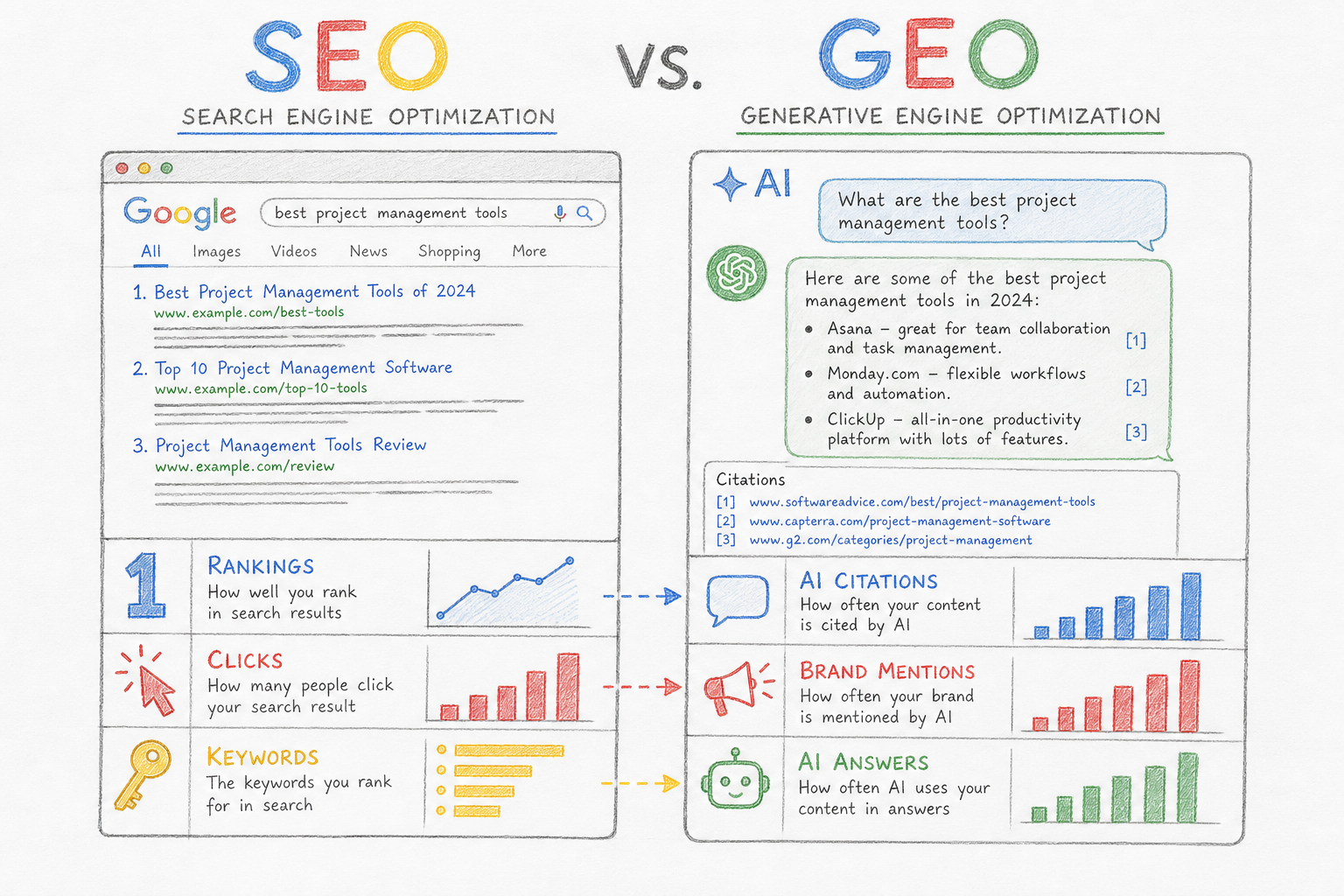
SEO focuses on visibility and clicks from search results. GEO adds being mentioned or cited in AI answers. Both share foundations like crawlability, content quality, and authority.
No — especially on Google, where AI Overviews and AI Mode build on the same search index and quality systems. Businesses should run SEO and GEO together.
Check the data first. Ranking can improve citation potential, but rankings do not guarantee citations. If your brand is missing from important questions or information is wrong, further work makes sense.
It depends on site condition, competition, crawl speed, and platform. Some changes may show within weeks; authority and topic coverage often take months.
No agency controls external platform answers. What you can do is improve readiness, measure from a baseline, and adjust factors your business controls.
Schema helps explain data and can support some rich results, but it does not guarantee AI citations. Google states structured data is not required for generative AI search.
Not for Google — Google states it does not use llms.txt in generative AI search today. You can experiment with it, but it should not outrank crawlability, indexing, and content quality.
Define a prompt set, capture answers, and analyse the context and wording AI uses about your brand. Results are snapshots for a time and condition, not permanent platform scores.
Yes — start with specific topics where you have real experience. You do not need to compete on every question against large brands. Niche content, case studies, and original data create differentiation.
You can build brand mentions through other sources, but a website helps you control core information, create landing pages, measure conversion, and publish owned content — so it remains an important foundation.
Do not expect instant sales. GEO is a search visibility and authority strategy. Revenue still depends on demand, offer, pricing, sales process, and conversion experience.
Submit the form and we'll reply within one business day with an honest view of where to start.
Share your site and goals if you have them. No sales call required.
 Chat with us
 Monday–Friday 10 AM–6 PM
We respond within one business day.