

What Is Content Marketing? Strategy Beyond Likes and Posts
Content marketing explained simply: how it differs from regular content, why it matters, the core steps, and how to measure impact on real business outcomes.
Almost every business creates content today — Facebook posts, short videos, website articles, or customer emails.
But creating content alone does not mean you are doing content marketing.
Many businesses post consistently yet sales do not grow, website traffic stays flat, and new customers rarely appear. The content was never tied to business goals.
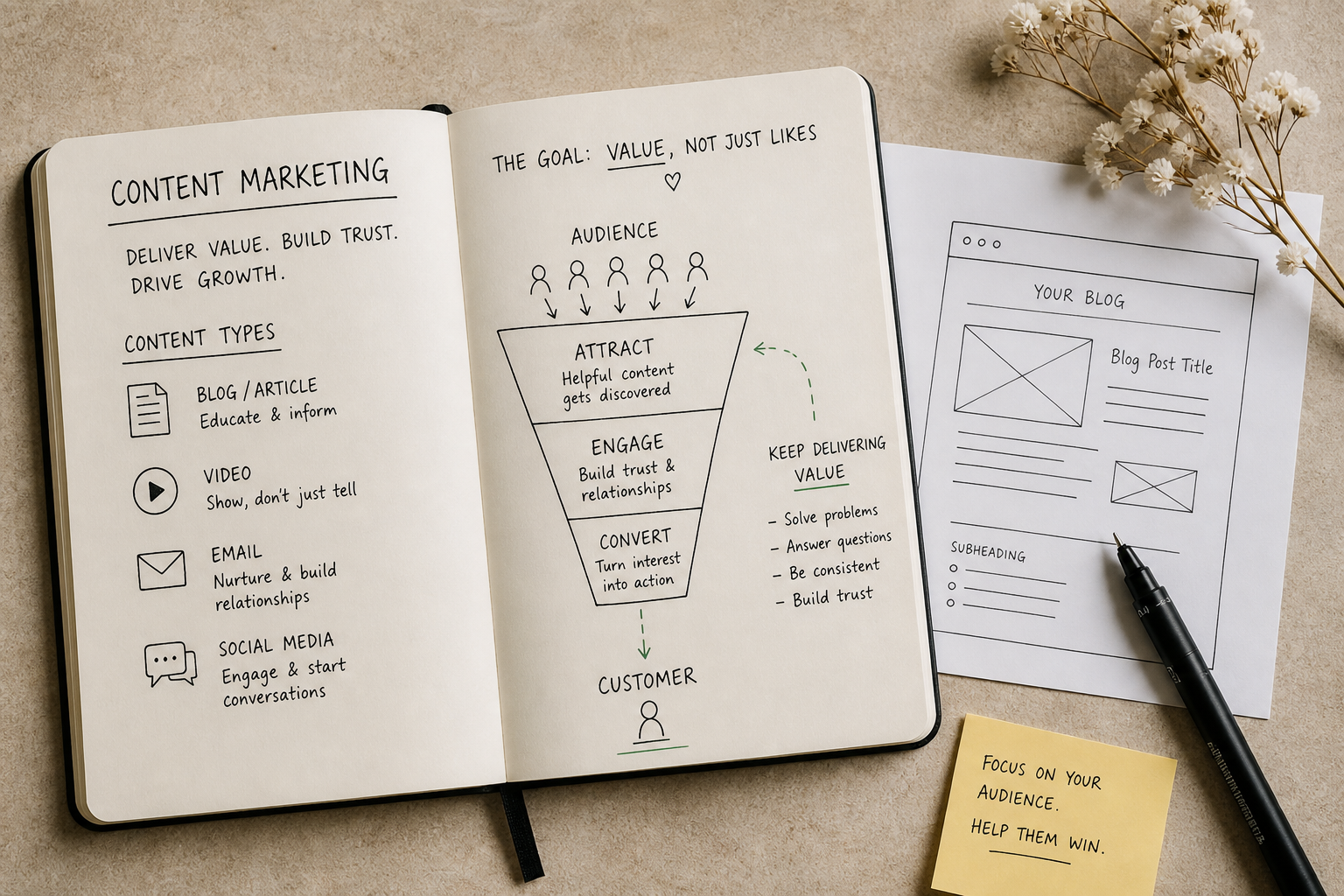
Content marketing is the practice of planning, creating, and distributing valuable content to attract your target audience, build trust, and gradually turn readers into customers — instead of pushing sales directly.
This article explains what content marketing is, why it matters, how it differs from regular content creation, and how businesses should start for long-term results.
What is content marketing?
Content marketing is a marketing strategy that creates and distributes valuable, relevant content that answers audience needs — to build relationships, trust, and future decisions instead of selling alone.
Content used in content marketing can take many forms, such as
- articles
- video
- infographics
- podcasts
- social media posts
- e-books
- webinars
The core is delivering value to readers — not advertising alone.
How is content marketing different from regular content?
Many people think posting on Facebook or writing a blog article equals content marketing.
Not always.
Writing content is producing material.
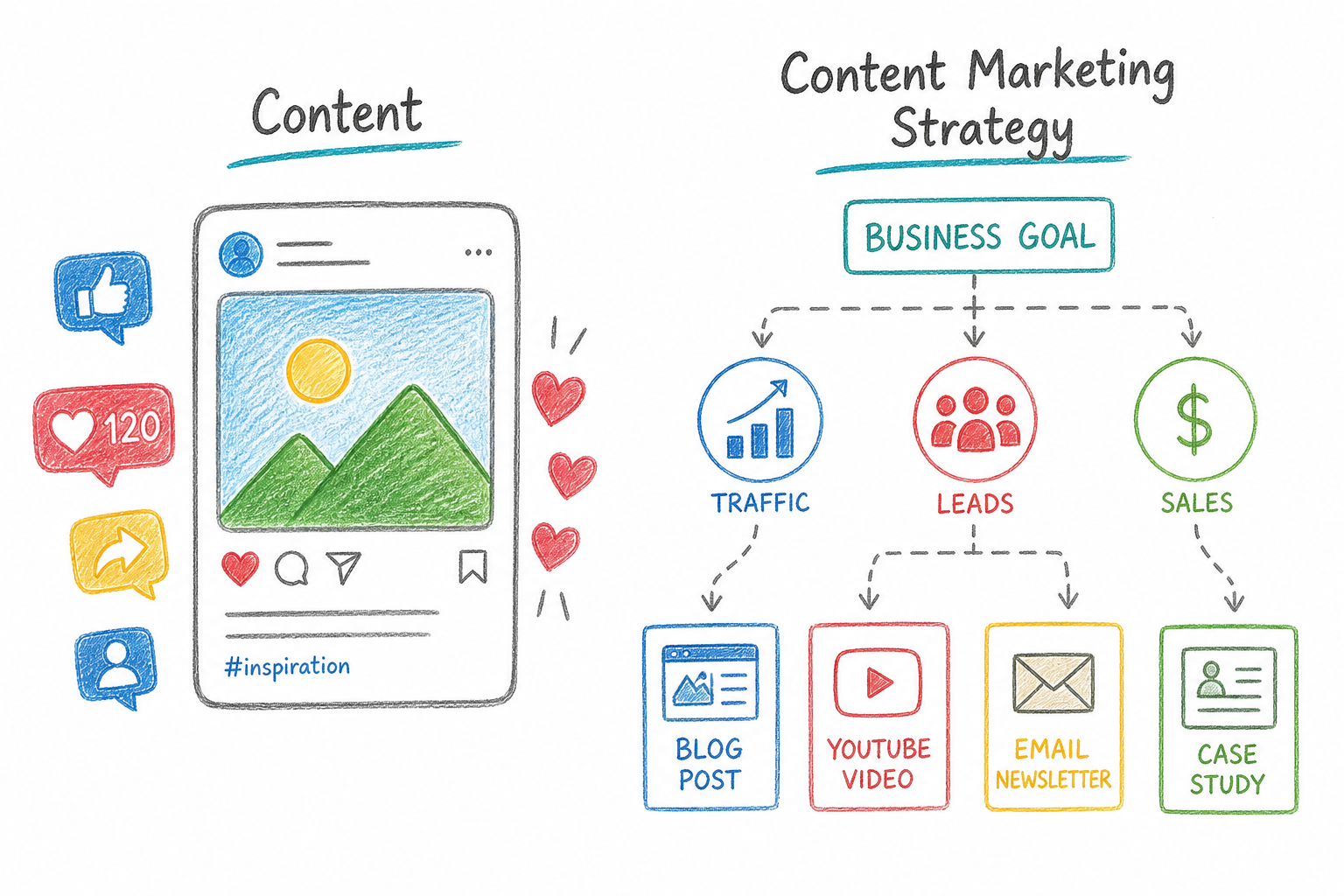
Content marketing uses content as part of a marketing strategy where every piece has a clear goal, such as
- building brand awareness
- increasing website visitors
- capturing leads
- growing sales
- retaining customers
In other words, content marketing starts from business goals — then plans content to support them.
Why does content marketing matter?
Modern buyers research before they purchase.
If your business publishes content that answers questions, educates, and solves problems, customers are more likely to remember and trust your brand.
Content marketing also helps businesses
- build credibility
- increase brand awareness
- attract organic traffic from Google
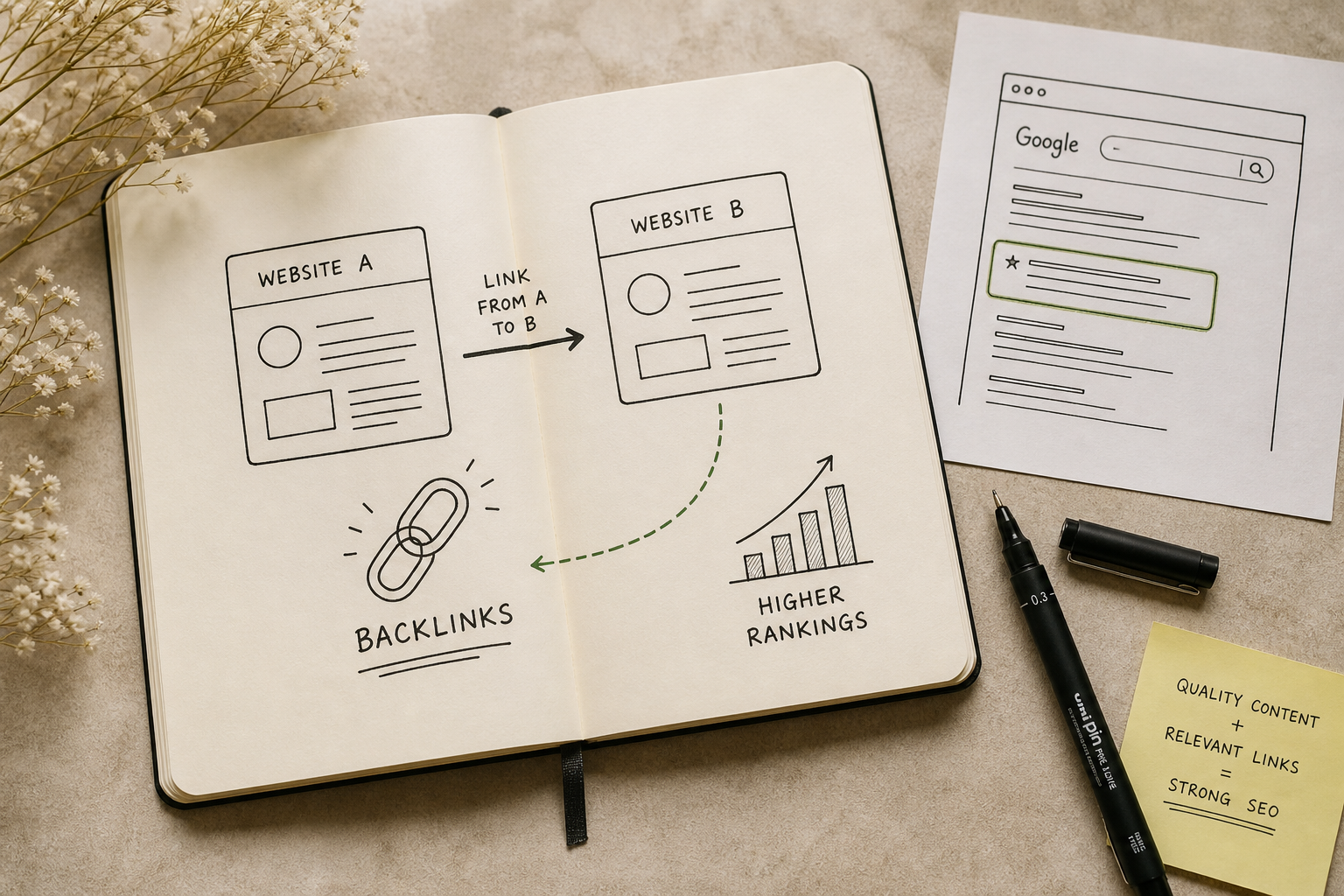
- support SEO
- improve conversion
- lower long-term acquisition cost
How does content marketing differ from SEO?
People often use the two terms interchangeably — but they play different roles.
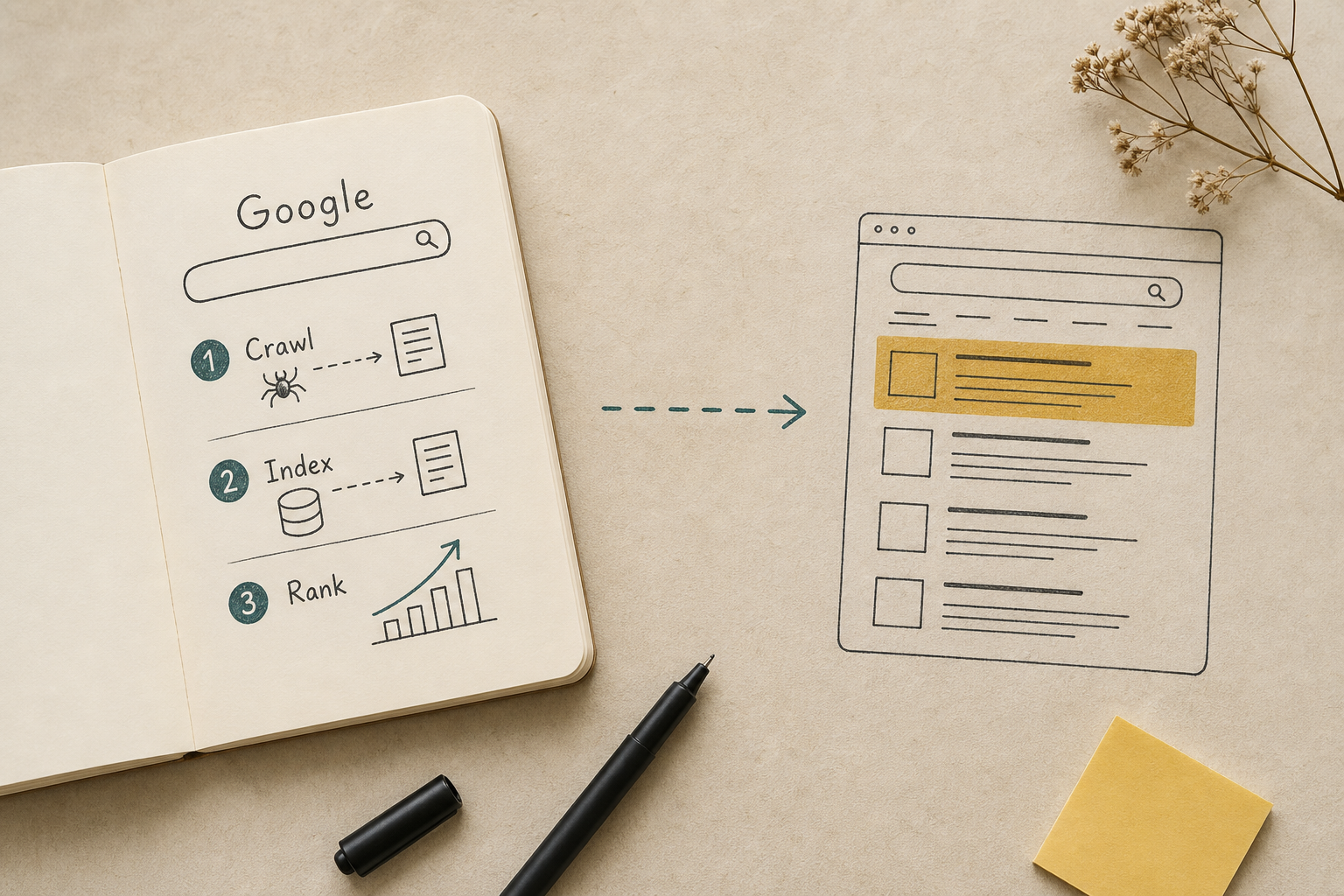
SEO is optimizing your website to rank on Google.
Content marketing is creating valuable content for your target audience.
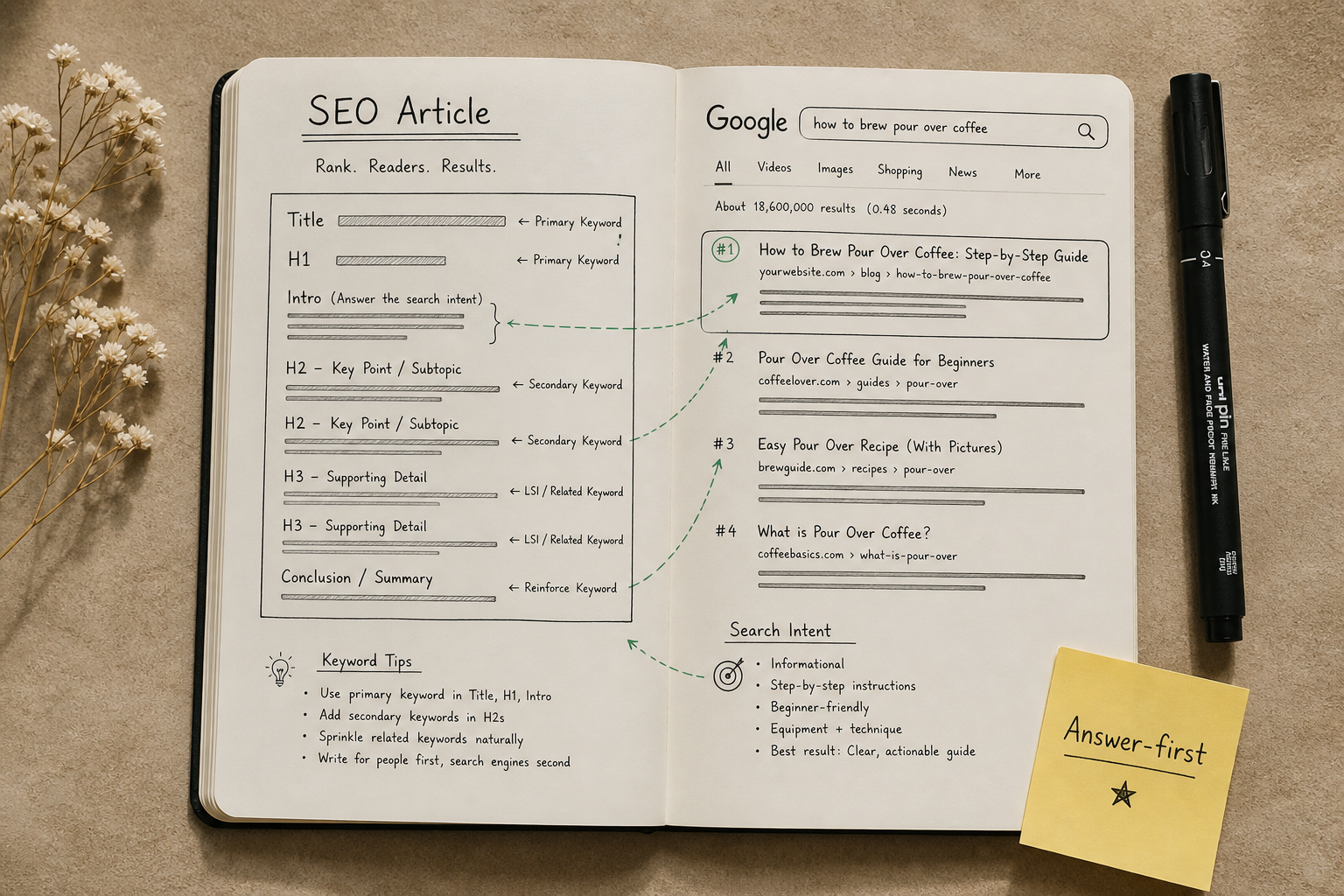
They work best together — see our content SEO strategy built around your service pages.
A site with strong SEO but no content struggles to grow organic traffic.
Conversely, great content without SEO structure may never reach searchers fully.
Goals of content marketing
Content marketing does not have a single goal.
It depends on the customer journey stage.
Examples include
- building brand awareness
- educating audiences
- building trust
- capturing leads
- growing sales
- retaining existing customers
Defining goals early helps you choose topics, formats, and distribution channels appropriately.
Formats in content marketing
Businesses can use many content types, such as
- SEO articles
- video
- short-form video
- infographics
- podcasts
- newsletters
- case studies
- how-to guides
- product reviews
- webinars
You do not need every channel — choose what fits your audience and resources.
Steps to do content marketing
1. Set goals
Start by answering what you want from content — more sales, more website traffic, or brand awareness.
2. Study your audience
Understand what customers care about, what problems they face, and what they search for.
3. Build a content strategy
Define topics, content types, distribution channels, and publishing cadence.
4. Create content
Produce material that matches search intent and delivers useful information.
5. Publish and promote
Distribute through your website, social media, email, or other relevant channels.
6. Measure and improve
Track metrics such as organic traffic, engagement, conversion rate, and leads — then refine your strategy.
Content marketing across the customer journey
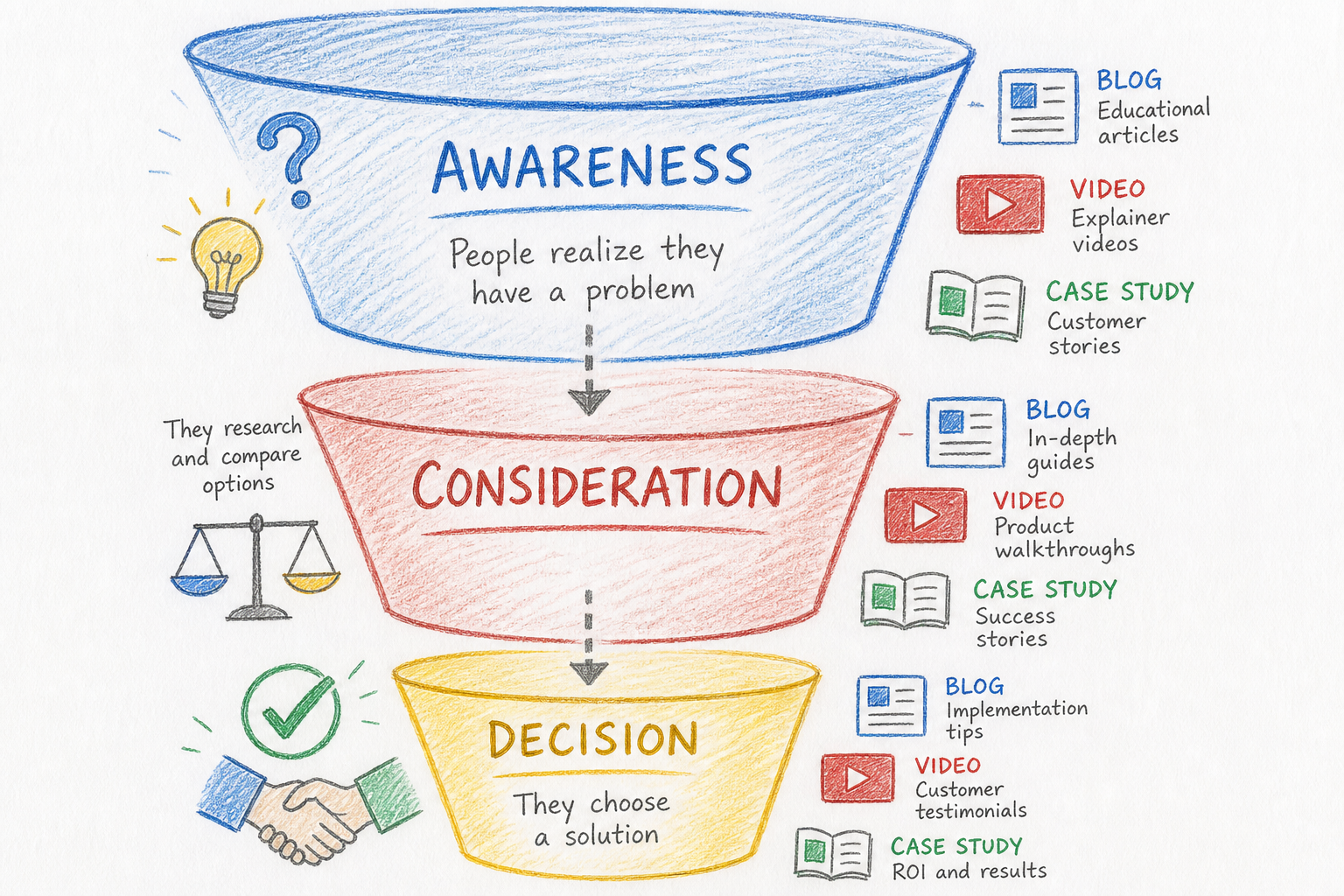
Content works better when it matches each decision stage.
Awareness
Answer questions and educate — for example what SEO is.
Consideration
Compare options — for example how SEO and SEM differ.
Decision
Share case studies, reviews, or service pages to help customers choose.
How does AI change content marketing?
AI speeds up planning and production — but it cannot replace business understanding or real experience.
Businesses that use AI well typically apply it to
- find ideas
- summarize research
- draft outlines
- analyze keywords
Then experts review, refine, and add depth so content stays high quality and differentiated.
How do you measure content marketing?
Do not measure only likes or shares.
Important metrics include
- organic traffic
- keyword rankings
- time on page
- conversion rate
- leads
- sales
- cost per lead
These numbers reflect business impact more clearly than engagement alone.
Common mistakes
Many businesses run content marketing without results because they
- publish without goals
- ignore search intent
- focus only on selling
- skip SEO
- do not measure
- never update old content
Fixing these often beats simply publishing more.
Summary
Content marketing is a strategy of creating and distributing valuable content to attract your audience, build trust, and turn interest into customers.
Good content marketing is not posting most often — it is creating content that answers customer needs, ties to business goals, and can be measured.
Combined with SEO, landing pages, and consistent analytics, content marketing becomes a long-term asset for organic traffic, leads, and sustainable growth.
Frequently asked questions
Is content marketing suited to small businesses?
Yes. It builds credibility and attracts customers without relying only on ads.
Do you need to post every day?
No. Consistency and quality matter more than volume.
How long does content marketing take to show results?
It depends on competition, channels, and content quality. With SEO, results usually compound over the medium to long term.
Can you use AI for content marketing?
Yes, but use AI as a tool — not publish without human review.