

What Is SEO vs SEM? Differences, Benefits, and Which to Choose
SEO and SEM explained simply: how they differ, benefits of each channel, which business types fit best, and how to split budget for the best results on Google.
If you are looking for ways to win customers from Google, you will almost certainly run into SEO and SEM.
Many people think they are the same thing.
Some think SEO means ranking organically while SEM means running ads.
Those ideas are not wrong — but they are incomplete.
SEO and SEM share the same goal: helping your business reach people searching for products or services on Google. But they differ in cost, timeline, and outcomes.
This article explains what SEO and SEM are, how they differ, and which approach fits your business.
What is SEO?
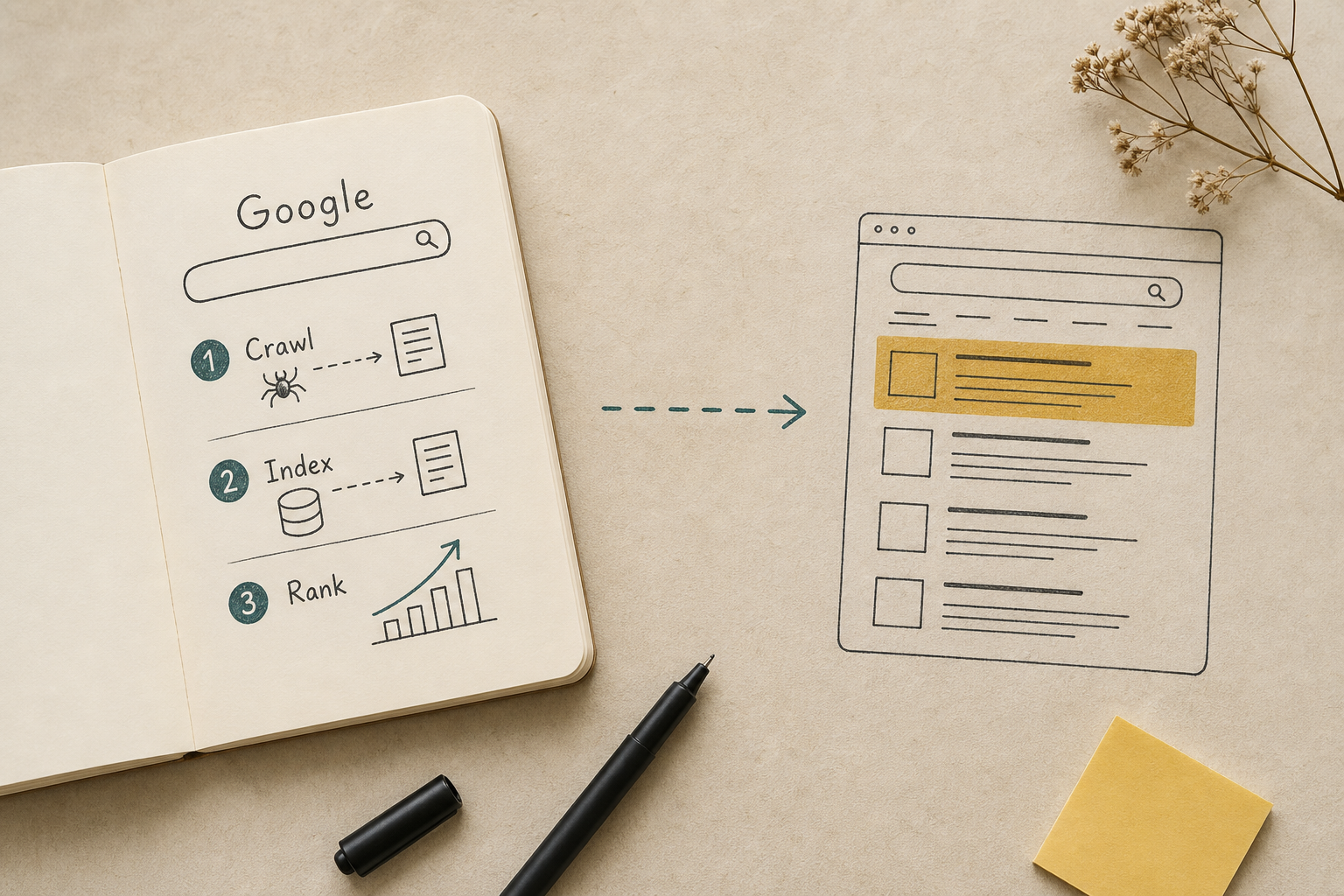
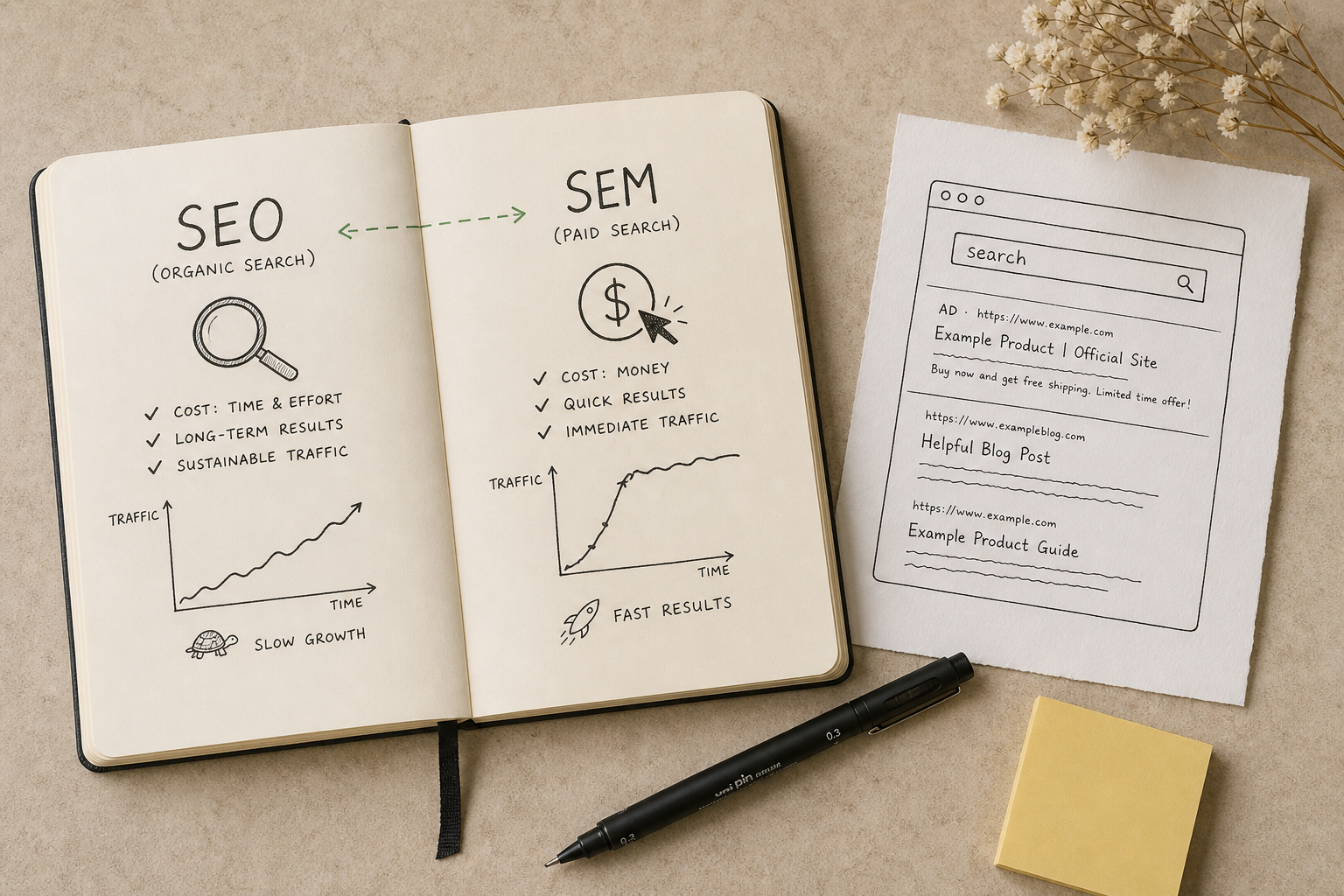
SEO (Search Engine Optimization) is the work of improving your website to increase the chance of ranking in natural search results — also called Organic Search.
SEO covers many areas, such as
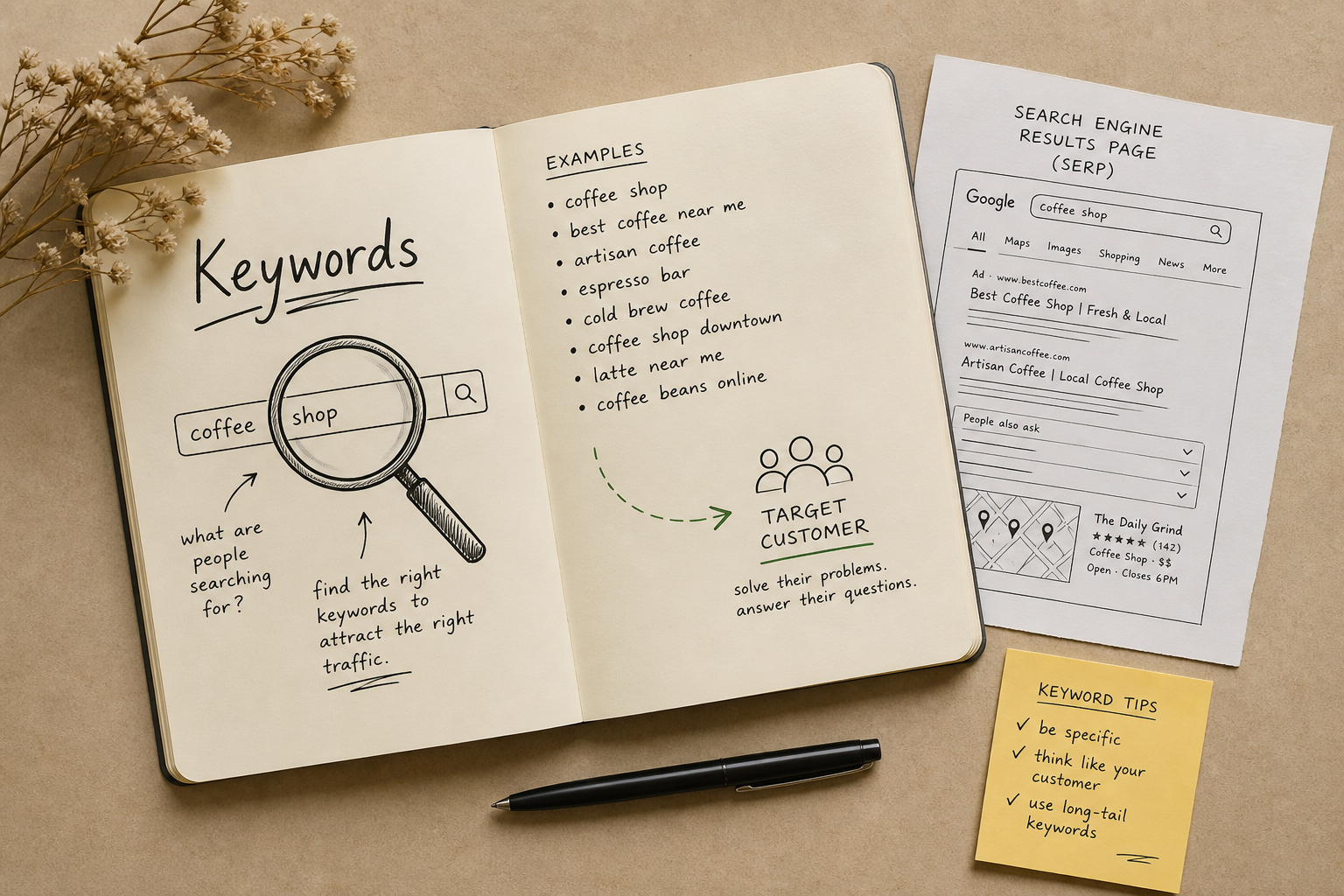
- keyword research
- content that matches search intent
- site structure improvements
- site speed
- building backlinks
- improving user experience
When your site is high quality and answers searchers well, Google is more likely to show it in better positions — for fundamentals, read what SEO is.
What is SEM?
SEM (Search Engine Marketing) is marketing through search engines using paid ads to appear on search results pages.
Today, SEM usually means Google Ads.
You choose keywords, then pay when someone clicks your ad — Pay-Per-Click (PPC).
The advantage is immediate reach without waiting for organic rankings — see our Google Ads management service.
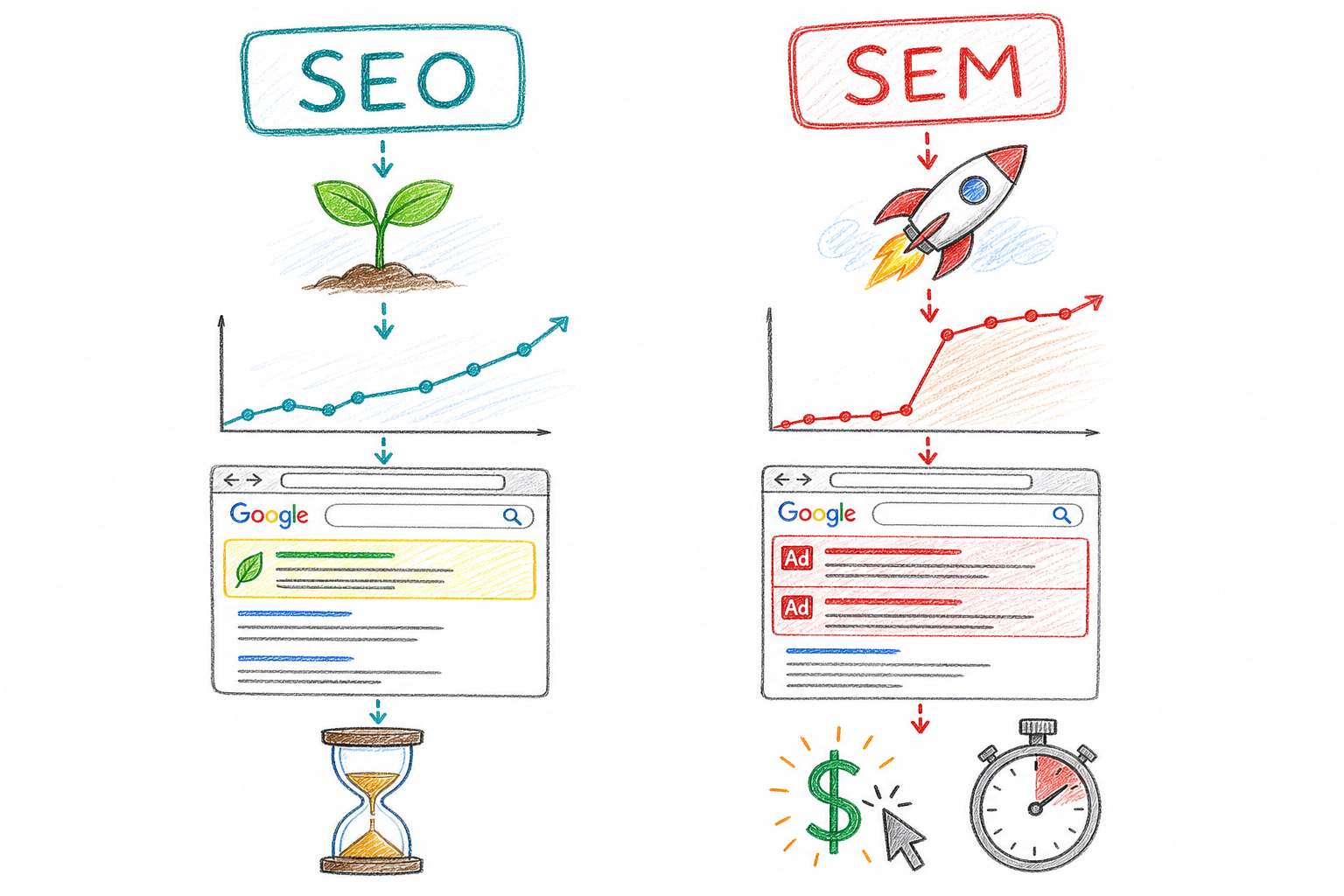
How do SEO and SEM differ?
| SEO | SEM |
|---|---|
| No per-click ad cost | Pay when someone clicks |
| Takes time to show results | Results come faster |
| Builds organic traffic | Builds paid traffic |
| Suited to long-term growth | Suited to short-term outcomes |
| Requires ongoing site work | Requires ad budget |
Both approaches have distinct strengths, and many businesses use them together.
How does SEO work?
Google uses algorithms to evaluate websites across many factors, such as
- content relevance
- site quality
- load speed
- user experience
- site trustworthiness
- backlinks from other sites
The goal is to show results that best answer the searcher’s question.
How does SEM work?
When someone searches for a keyword you target
Google enters ads into an auction.
Ad position is not determined by bid alone. Google also considers
- ad quality
- keyword relevance
- landing page quality
- expected CTR
So increasing budget alone does not guarantee the best ad position.
Benefits of SEO
- Steady visitor growth
- No per-click ad spend
- Stronger brand credibility
- Lower customer acquisition cost over time
- Supports business scaling
Benefits of SEM
- Fast visibility
- Precise audience targeting
- Budget control
- Easy market testing
- Real-time measurement
Which is better — SEO or SEM?
There is no one-size-fits-all answer.
It depends on your goals and business stage.
If you need customers soon, Google Ads usually delivers faster.
If you want to lower acquisition cost over time, SEO often returns more value.
Many companies run both channels together.
Google Ads generates leads early while SEO builds organic traffic over time.
What business types fit SEO?
SEO fits businesses that
- want long-term growth
- face high competition
- want to reduce ad spend later
- plan to publish content consistently
Examples include
- home builders
- accounting firms
- clinics
- factories
- B2B companies
If that sounds like your business, see our SEO services built for long-term results.
What business types fit SEM?
SEM fits businesses that
- need customers quickly
- launch new products
- run promotions
- want to test markets
- have ad budget
How should you split budget between SEO and SEM?
There is no fixed ratio.
For example
- A new business might start with Google Ads for customers while investing in SEO alongside
- A business with a strong site might increase SEO spend to reduce ad dependence
What matters is measuring customers and return — not just clicks or rankings.
Why landing pages matter for both SEO and SEM
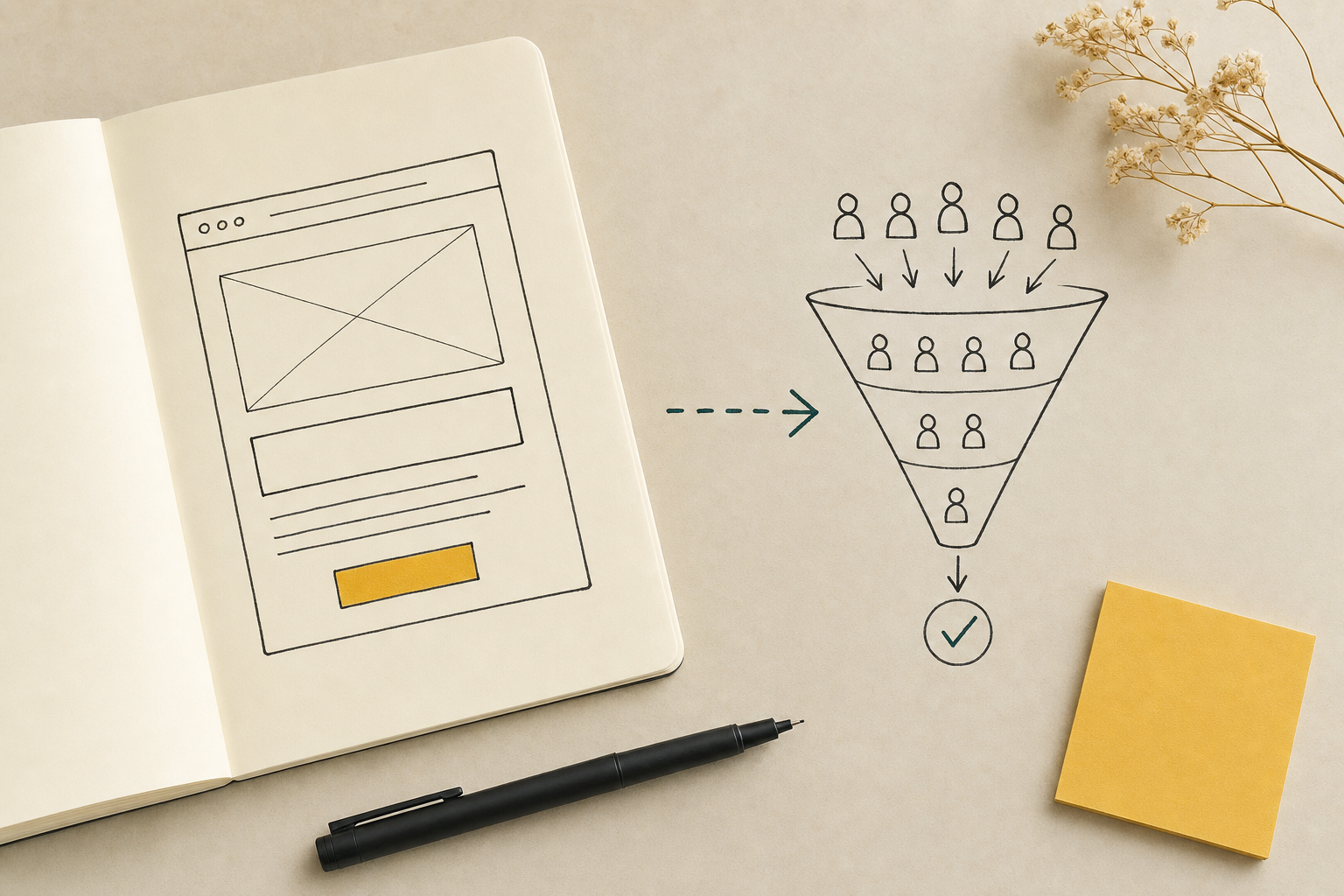
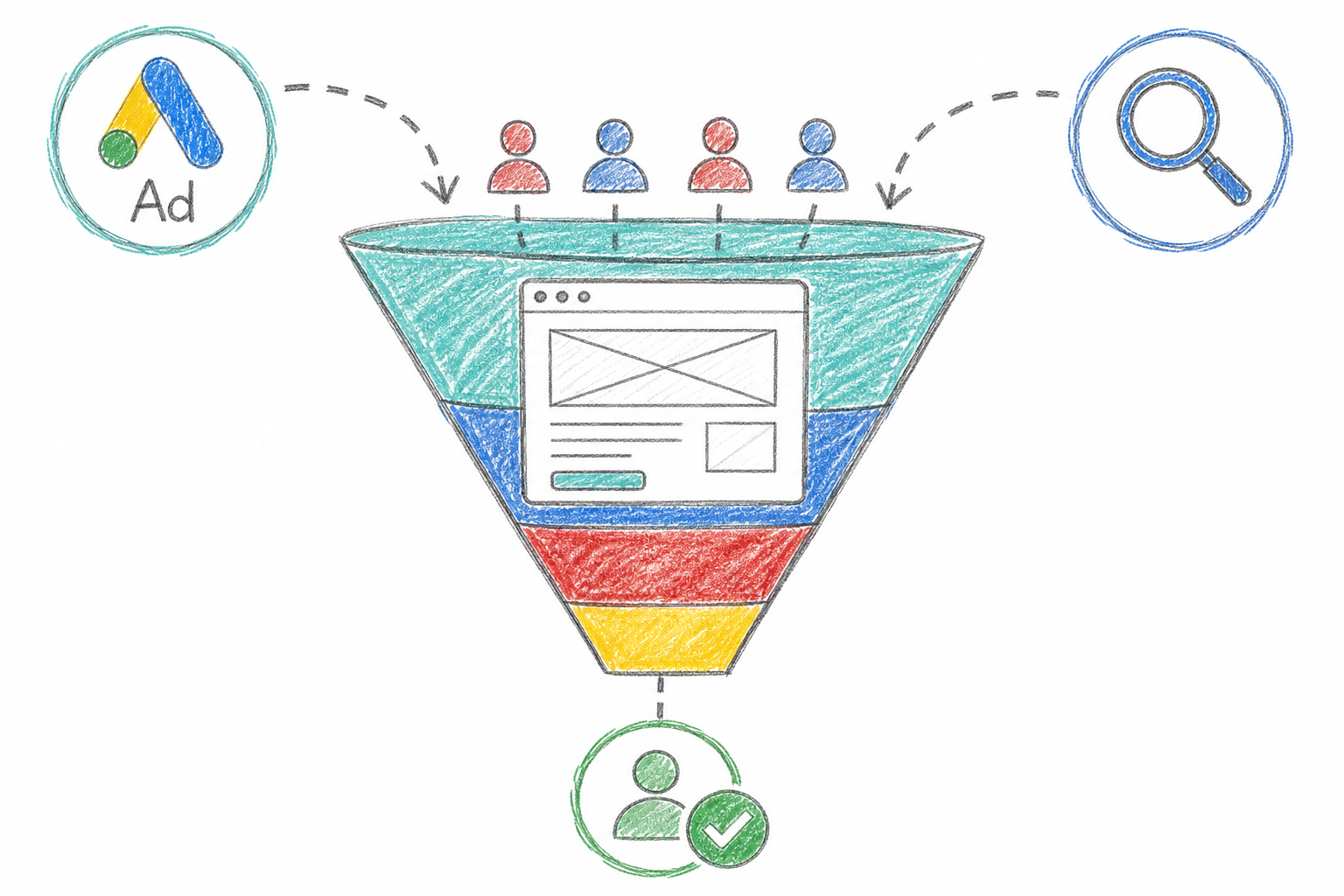
Whether visitors come from SEO or Google Ads, if your landing page does not answer their question, conversion drops.
A strong landing page should have
- a clear offer
- complete information
- visible calls to action
- fast load times
- mobile-friendly design
How does AI search affect SEO and SEM?
Search tools increasingly use AI to summarize answers and help people find information.
For SEO, content quality and site trust matter more.
For SEM, ads still reach high-intent buyers — but ad quality and landing page quality matter even more.
Summary
SEO and SEM both help businesses reach customers through Google, but they work differently.
SEO focuses on organic traffic and long-term growth. SEM uses ads for faster outcomes.
For many businesses, choosing only one channel is not the best answer. Planning SEO and Google Ads together — with strong landing pages and clear measurement — improves your chance of winning customers and spending marketing budget wisely.
In the end, measure customers and return on marketing investment — not just Google rankings or click counts.
Frequently asked questions
Do you have to choose between SEO and SEM?
No. Many businesses use both together to build short-term and long-term results.
How long does SEO take?
Generally you start seeing results within 3–6 months, depending on competition and site quality.
How fast does Google Ads work?
Ads can start showing soon after campaign approval, but optimizing for best results takes data and time.
What should a small business start with?
If you need customers fast and have budget, Google Ads is a good start. For sustainable growth, invest in SEO from the beginning too.