


What Is a Long-Tail Keyword? Why It Matters for Modern SEO
Long-tail keywords explained: how they differ from short-tail, how to find and choose them, industry examples, and topic cluster strategy that drives real leads.
Many people start what SEO is by chasing high-volume keywords — more searches must mean more visitors.
In practice, high-volume terms also attract heavy competition, especially for new or small sites.
That is why many SEOs prioritize long-tail keywords.
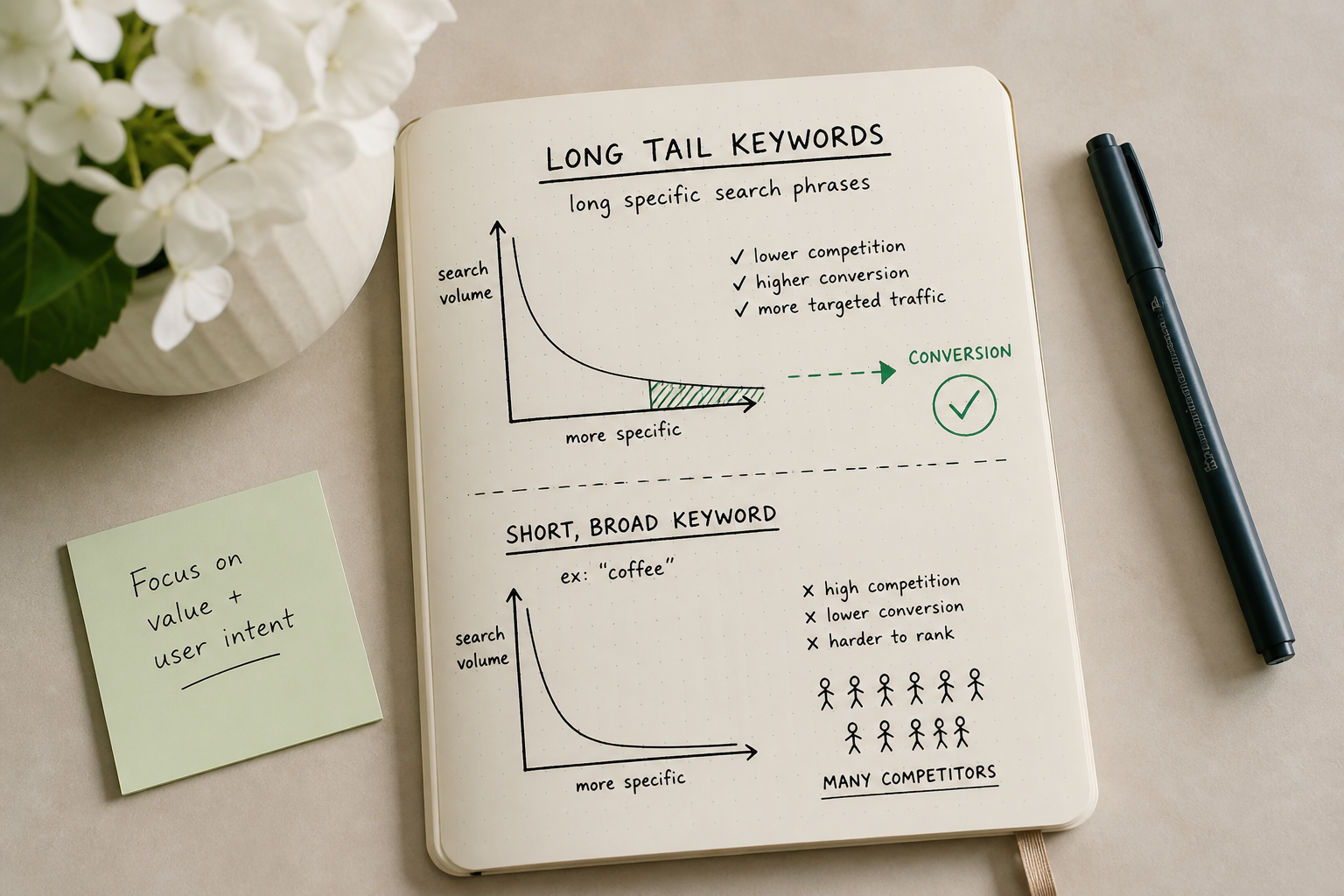
They have lower search volume but also lower competition, sharper intent, and often better sales or lead quality than broad terms.
This article explains what long-tail keywords are, how they differ from other keyword types, how to find and choose them, industry examples, and why they are central to modern SEO and AI search.
What is a long-tail keyword?
A long-tail keyword is a more specific search phrase than a broad keyword — often longer and clearer about what the searcher wants.
Examples
Short-tail keyword
- shoes
Long-tail keywords
- women’s running shoes for flat feet
- marathon running shoes for beginners
What makes a term long-tail is specificity of intent, not word count alone.
Long-tail keywords sit inside the broader keyword system and must be analyzed alongside search intent — why someone typed that phrase.
Why do long-tail keywords matter?
Long-tail keywords reach people searching for something precise.
Someone searching
air purifier
may want general information.
Someone searching
air purifier for bedroom under 30 square meters
usually has a clearer goal and is closer to buying.
That is why long-tail keywords often convert better — especially when content is built through content marketing that answers specific questions.
How do long-tail and short-tail keywords differ?
| Topic | Short tail | Long tail |
|---|---|---|
| Specificity | Low | High |
| Search volume | High | Lower |
| Competition | High | Lower |
| Conversion | Lower | Higher |
| Fit for new sites | Harder | Better |
Long-tail keywords do not replace short-tail terms — both should work together in one site structure.
Why do long-tail keywords create more customers?
Long-tail keywords reflect search intent clearly.
Examples
- What is SEO
- what is SEO
- SEO agency for manufacturing companies
Each attracts a different searcher.
More specific keywords usually mean searchers closer to a decision — easier to turn visitors into customers. For expert planning, see our SEO services.
Case study: short-tail vs long-tail results
Illustrative scenario: a new B2B site in an industrial niche, domain under one year old, goal = SEO service leads.
Strategy A — single short-tail focus
- Main keyword: SEO services
- After 6 months: high impressions but rankings on page 2–4
- Low organic CTR (~1–2%)
- Few organic leads — mixed intent and strong competitor authority
Strategy B — long-tail cluster
- Keyword group: SEO for factories, B2B SEO services, how to SEO an industrial website
- After 6 months: less total traffic but faster page-one rankings
- Higher CTR because content matches the query
- Better lead quality despite fewer visitors
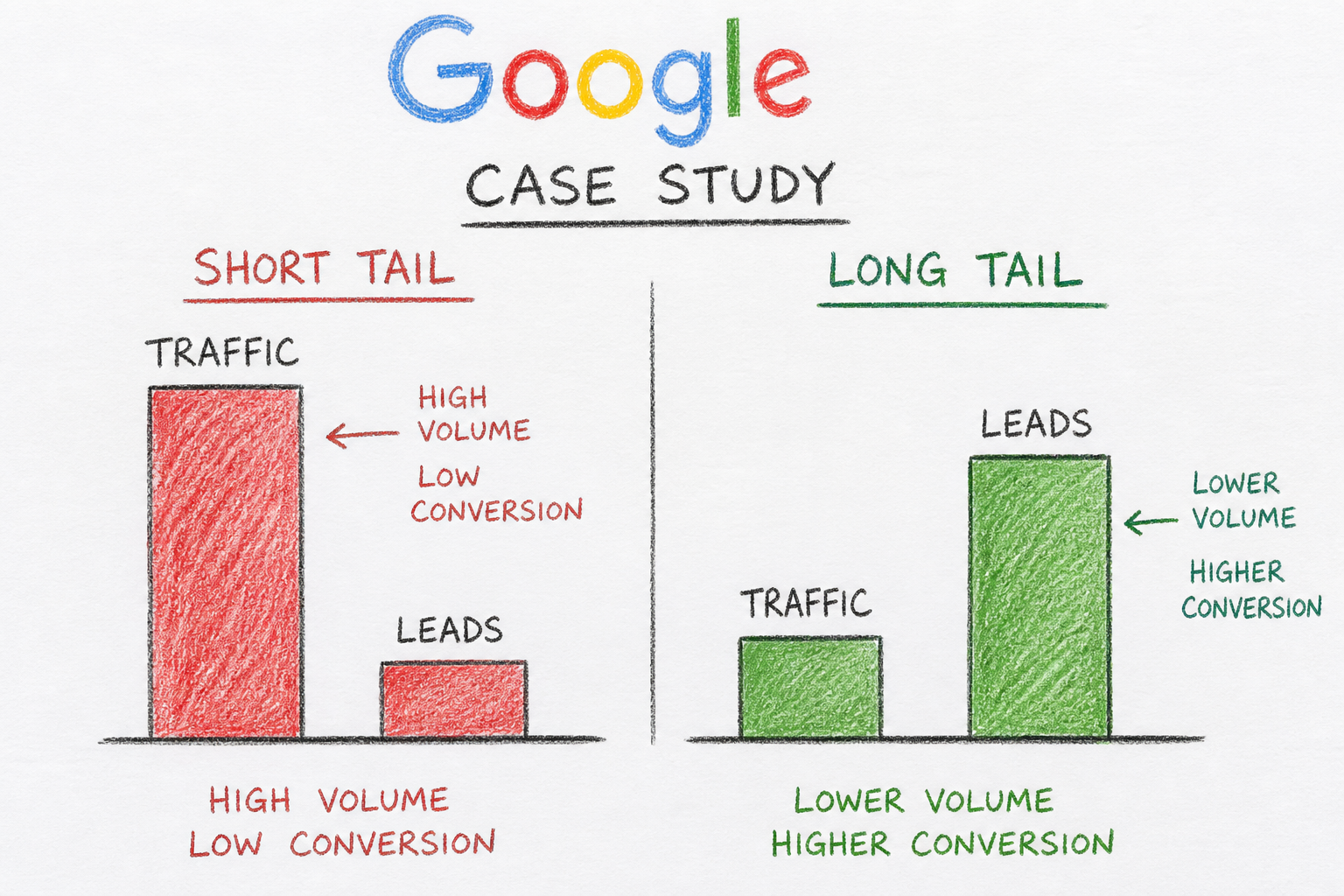
Key lesson: do not pick strategy from volume alone — weigh realistic rankings, conversion, and business fit.
Keyword funnel: long-tail at each journey stage
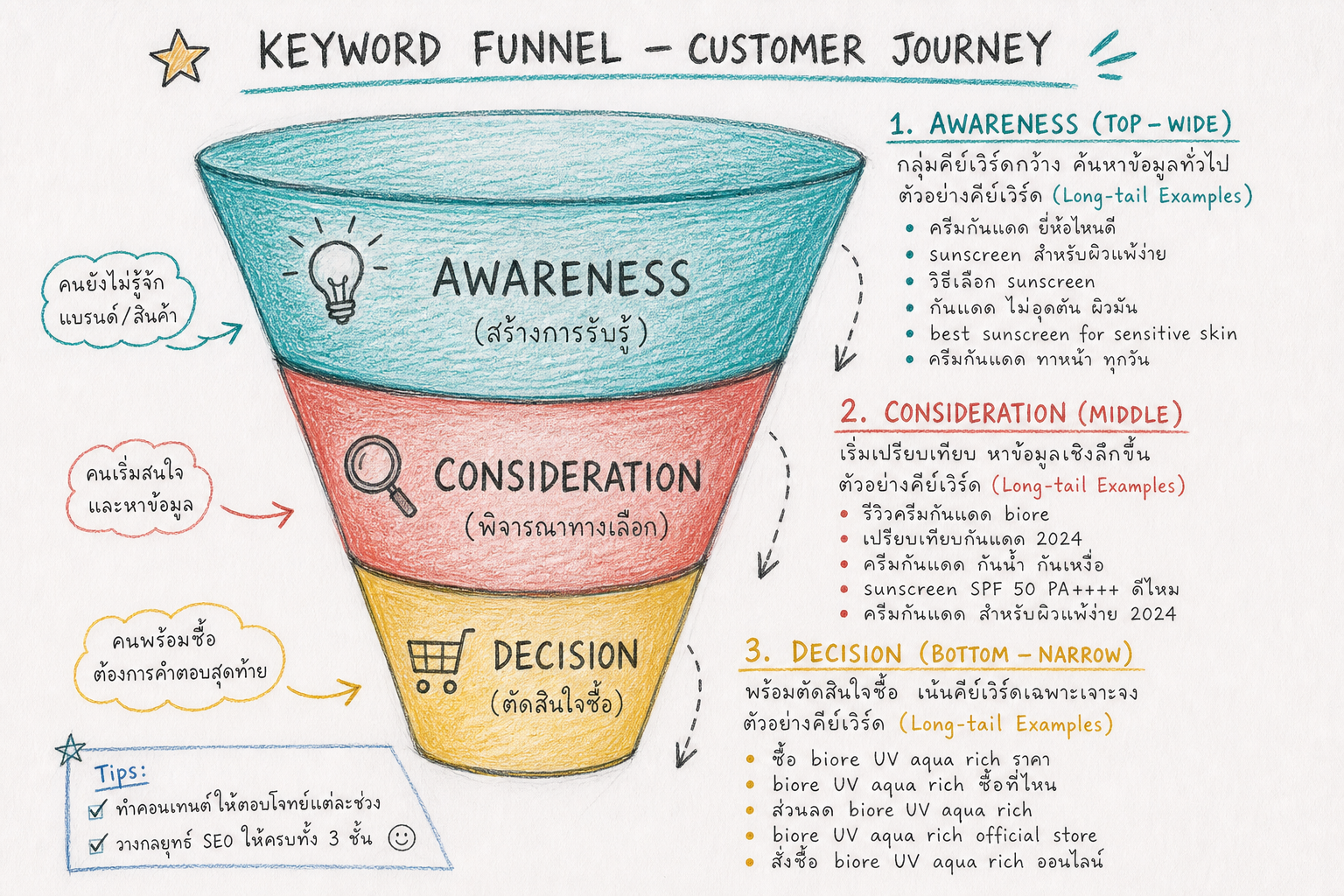
Long-tail keywords appear at every customer journey stage — each needs different content.
Awareness
Searchers still learning — they want knowledge.
- what is SEO
- why is my website not getting traffic
- what is a keyword
Best for educational posts like what is SEO and what is a keyword.
Consideration
Searchers understand the problem and compare options.
- DIY SEO vs hiring an agency
- what is content marketing
- what is a long-tail keyword
Best for guides and comparisons like what is content marketing.
Decision
Clear buying intent — often highly specific long-tail terms.
- SEO agency for manufacturing
- B2B SEO services Bangkok
- industrial SEO company
Best for service pages linked to SEO services.
Who should focus on long-tail keywords?
Long-tail keywords fit
- new websites
- local businesses
- B2B companies
- online stores
- sites in competitive markets
Sites with lower domain authority often see faster results starting with long-tail terms.
Long-tail keyword examples by industry
Good long-tail keywords reflect real services — popular industry examples:
Clinic / healthcare
- acne treatment clinic Bangkok
- vitamin injection skin price
- Invisalign clear braces clinic Bangkok
Accounting firm
- accounting firm for SME Bangkok
- company registration required documents
- monthly accounting for restaurants
Factory / manufacturing
- ERP system for food factory
- ISO standard manufacturing plant
- SEO for factory websites
Home builder
- modern two-story house build price
- home builder Nonthaburi
- house construction with interior design
Online store
- office fashion clothes for women
- birthday gift for girlfriend
- women’s running shoes flat feet
Use these as patterns — adapt to your services, location, and search intent.
How to find long-tail keywords
1. Google Autocomplete
Start typing a main keyword in Google — suggestions reflect real searches.
2. People Also Ask
Questions in search results are strong long-tail ideas.
3. Related Searches
Terms at the bottom of results often mirror related topics.
4. Google Search Console
See queries you already rank for — many are long-tail opportunities close to page one.
5. Keyword research tools
Ahrefs, SE Ranking, Google Keyword Planner, Google Trends
These show volume, competition, and related terms.
How to choose long-tail keywords
Not every long-tail term deserves a page.
Before choosing, consider
- business relevance
- search intent match
- lead or sales potential
- ability to write quality content
- fit in a topic cluster
Do not pick keywords only for volume — pick terms that best serve your business.
Long-tail keyword checklist before writing
Use this checklist before every article:
- Keyword ties to a real product or service you sell
- Search intent is clear — learn, compare, or buy
- You can answer the query better than current top results
- Unique angle so the page does not duplicate existing content
- Internal link targets exist — hub, services, related posts
- Keyword sits in a planned cluster, not a random standalone post
- Competition is realistic for your site’s authority
- Conversion potential — not empty traffic
- Content format matches intent — article, guide, comparison, or service page
- Plan to update when data or search behavior changes
Keyword clustering guide with real examples
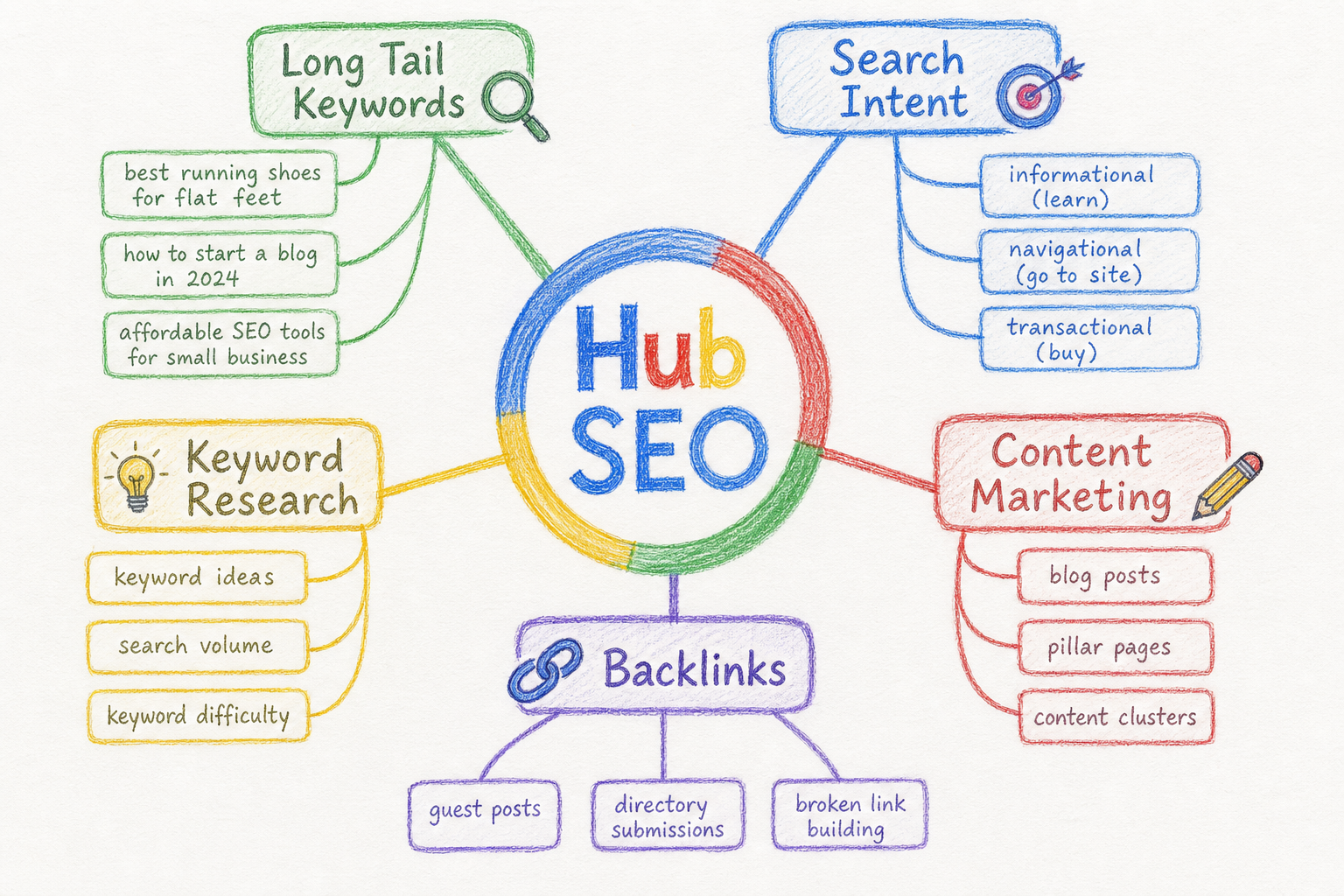
Do not scatter long-tail keywords as isolated posts — group them into topic clusters.
Example cluster: SEO
Hub (pillar)
- What is SEO — overview pillar
Keyword & intent cluster
- What is a keyword — keyword basics and search intent
- What is a long-tail keyword — this article
- what is keyword research
- what is search intent — covered in what is a keyword
Content & authority cluster
Commercial cluster
- SEO services — buying-intent page
This structure helps Google and AI search understand topical expertise and lets users continue learning easily.
Long-tail keywords and AI search
Users search with longer, natural phrases such as
- WordPress website company for small business
- best air purifier for allergy sufferers
AI search makes natural-language queries more common.
Content that answers specific questions matters more — especially when linked through content marketing and clear topic clusters.
Long-tail keywords and topic clusters
Long-tail keywords should not live as scattered one-off posts.
Group them into topic clusters.
Example
Main topic
- SEO
Subtopics
- What is SEO
- What is a keyword
- what is a long-tail keyword
- search intent — see what is a keyword
- What are backlinks
This helps Google understand expertise and helps users find related information.
For full cluster planning and SEO services, see our service page.
Common mistakes
- choosing long-tail terms for volume only
- duplicate articles on similar queries
- skipping search intent analysis
- missing internal links
- prioritizing post count over quality
- never updating when information changes
Summary
Long-tail keywords are specific searches that reflect user needs more clearly than broad terms.
Each term may have modest volume, but planned clusters aligned with search intent can drive steady organic traffic and leads.
For most businesses — especially new sites — starting with long-tail keywords often produces faster results and builds a base for harder terms later.
Start with what is a keyword and what is SEO, then expand the cluster with content marketing and SEO services to build topical authority AI search can understand.
Frequently asked questions
Do long-tail keywords need three or more words?
No. Specificity of intent matters more than word count alone.
Are low-volume long-tail keywords worth targeting?
Yes. They usually have lower competition and higher conversion potential.
Should new websites start with long-tail keywords?
Often yes. They rank faster than competing for broad, high-volume terms.
Can you use long-tail keywords in Google Ads?
Yes. They often lower cost per click because competition is typically lower.